
UNITE.rehab.perform
Denver's Best Sports Physical Therapy
Winter Sports Injuries Don't Start on the Mountain: Your Body Has to Be Ready for the Demand
Written by Dr. Victoria, PT, DPT
Many winter sports injuries aren’t caused by one catastrophic mistake. They happen when your body is suddenly asked to do something it hasn’t been prepared to handle for months.
High-speed turns. Hard stops. Repeated skating. Uneven terrain. Jumping. Rotating. Landing. Falling. Doing it all again while you’re tired.
Your sport hasn’t changed.
Your capacity has.
That gap is where most winter sports injuries come from. Knees, ankles, shoulders and wrists, and the low back tend to take the hit, and overuse injuries creep in when you ramp up faster than your body can keep up. The fix starts weeks before your first run: building the strength, single-leg control, deceleration, and conditioning your sport is about to ask for.
The Real Problem With “Getting Back Into It”
There’s a common assumption that if you were able to ski, snowboard, skate, or play hockey last winter, you’ll be able to do it again this winter.
But fitness doesn’t work that way. You may still remember how to skate. You may still know how to carve a turn. You may still have the confidence to hit the slopes.
What you may not have is the strength, power, work capacity, and movement control that you had at the end of last season.
That’s why the first few weeks of a winter sports season can be so important.
Your skill might be ready before your body is.
What Makes Winter Sports So Demanding?
Winter sports create a unique combination of physical demands.
You’re often working against resistance while trying to maintain control on a surface that doesn’t behave like the gym floor or a running track your body is used to.
And many movements happen quickly, meaning your body has to react rather than simply execute.
For example, a skier may need to absorb a sudden change in terrain while maintaining position through the legs and trunk.
A hockey player may need to accelerate, stop, change direction, and immediately accelerate again.
A snowboarder may have to recover from an unexpected shift in balance.
A winter runner may deal with slippery or uneven surfaces while maintaining pace.
These situations require more than basic strength. They require capacity under unpredictable conditions.
The Most Common Winter Sports Injuries
The injury itself isn’t always the most important part of the story.
The more useful question is:
Why wasn’t the body able to handle the demand?
Knee Injuries
Knee injuries are a major concern in sports involving cutting, rotation, jumping, landing, and rapid changes in direction.
Skiing and snowboarding can place significant demands on the knee during falls and changes in terrain. In skiing especially, twisting falls can strain or tear ligaments like the ACL and MCL. Hockey players also repeatedly load the knee through skating, acceleration, deceleration, and directional changes.
The answer isn’t simply “strengthen your knees.”
Your hips, trunk, ankles, and nervous system all contribute to how your knee handles force.
TRY THIS to work on lower-body loading for your winter sport: VIDEO
Ankle Injuries
Your ankle doesn’t have to be dramatically rolled for it to become a problem.
Repeated skating, uneven surfaces, awkward landings, and quick weight shifts all challenge the foot and ankle.
And if you’ve had an ankle sprain before, even years ago, the season doesn’t magically reset your injury history.
A previous injury may have left behind limitations in strength, mobility, or balance that become noticeable when your winter sport demands more from the joint.
Have a past injury you’re worried will limit your season? Our sports performance physical therapists will take you through a FREE movement assessment and help you understand how to address past injuries and avoid them this winter.
Shoulder and Wrist Injuries
Falls are an unavoidable possibility in many winter sports. When you fall, your body has to figure out where the force goes. Often, the natural instinct is to stretch out your arm to catch yourself.
Sometimes that means your wrist, your shoulder, or your collarbone takes the force.
While protective equipment and proper technique matter, so does having an upper body capable of controlling and absorbing force.
Low Back Pain
Winter sports ask your body to spend long stretches in athletic positions. That means your trunk needs to maintain control while your hips and legs generate force.
Once fatigue enters the picture, that control can change.
The result may be back soreness, stiffness, or pain that becomes more noticeable as the day goes on.
Try these to prep your trunk for long days in an athletic position:
Overuse Injuries
Not every injury has a dramatic moment. Sometimes the warning signs build slowly.
A little knee soreness.
A tight calf.
A shoulder that aches after skating.
Back stiffness the morning after skiing.
These symptoms can be easy to dismiss, especially when you don’t want to miss the next weekend.
But increasing activity faster than your body can adapt is one of the easiest ways to turn a manageable problem into a season-ending one.
Skiing vs. Snowboarding: How the Injuries Differ
Skiers and snowboarders fall differently, so they tend to get hurt differently.
- – Skiing: More likely to involve the knee, especially the ACL and MCL. With each foot locked into a long ski, a twisting fall can act like a lever on the joint.
- – Snowboarding: More likely to involve the upper body, like the wrist, shoulder, or collarbone. With both feet strapped to one board, falls often end with an outstretched hand.
Neither sport is “safer.” They just ask you to prepare differently. Skiers get the most out of single-leg strength and knee control. Snowboarders benefit from upper-body strength and learning how to fall without reaching for the snow.
Your First Winter Workout Shouldn’t Be Your Hardest
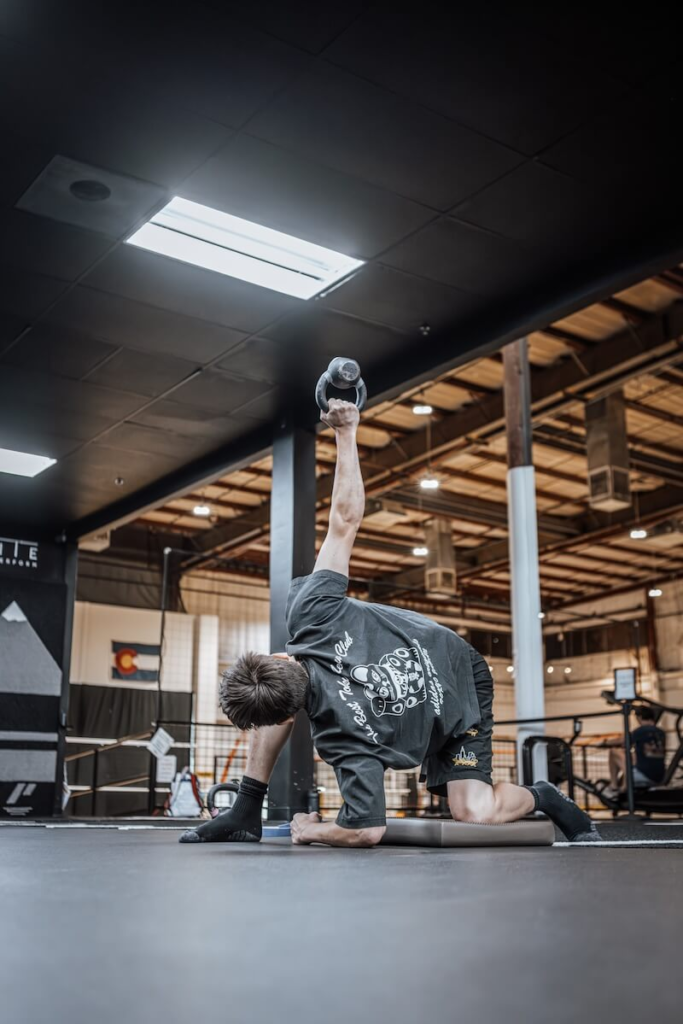
This is one of the biggest mistakes athletes make.
They spend months doing relatively little sport-specific training and then immediately jump into a full day of activity. It’s the winter version of becoming a weekend warrior by accident.
Eight hours on the mountain. Three hockey practices in one week. A full weekend tournament. A long winter run on unfamiliar terrain.
Your body doesn’t care that you’ve been waiting all summer.
It still needs an appropriate progression.
Start With Capacity
Before worrying about how much you can do in one session, build the physical qualities that allow you to tolerate the session.
That means developing:
- – Lower-body strength
- – Single-leg strength
- – Trunk control
- – Foot and ankle capacity
- – Upper-body strength
- – Cardiovascular fitness
- – Deceleration ability
- – Explosive power
You don’t need to train like a professional athlete.
You do need to train specifically enough that your body isn’t seeing every demand for the first time when winter arrives. Same goes for teens, which is the whole idea behind our strength and power training for young athletes.
Don’t Just Train the Muscles. Train for the Situation.
This is where winter sports preparation can become much more effective.
A squat can make you stronger. But winter sports rarely ask you to simply squat. They ask you to absorb force while moving. To stabilize on one leg, rotate, react, accelerate, stop, and recover from an unexpected movement.
That’s why your training should eventually progress from general strength into movements that challenge speed, control, balance, and force production rather than performing the same basic exercises all season.
The goal is to make training look more like the demands you’re preparing for.
Your Previous Injury Matters More Than You Think
If you’ve already had an ACL injury, ankle sprain, shoulder injury, concussion, or another significant sports injury, don’t treat this season as a clean slate.
Your injury history is part of your preparation.
Before winter sports begin, ask yourself:
- — Does the injured side actually perform like the other side?
- — Can you produce force?
- — Can you absorb force?
- — Can you change direction?
- — Can you balance?
- — Can you repeat the movement without your technique falling apart?
Being pain-free is a great milestone…but it isn’t the finish line.
Cleared isn’t the same as ready. Whether it’s you or your teen athlete coming back from an ACL injury, one preseason assessment can show what’s caught up and what hasn’t, and give you a clear plan before the season starts.
A Better Way to Prepare for Winter Sports
Instead of asking, “What exercises should I do for skiing?” start with a better question:
“What will my sport ask my body to do?”
Then train those qualities.
If your sport requires repeated acceleration and deceleration, train both.
If it requires single-leg control, don’t build your program entirely around bilateral exercises.
If you need to tolerate long periods of activity, develop the conditioning to match.
If you’re returning from an injury, identify what hasn’t fully caught up yet.
That’s the difference between simply exercising and actually preparing for a sport.
The Best Exercises to Prepare for Ski and Snowboard Season
So what does that look like in practice? For skiers and snowboarders, these are some of the best exercises to start with, because each one trains a quality the mountain is going to ask for.
- — Split Squats: Single-leg strength for holding your position through long, burning turns.
- — Lateral Lunges: Side-to-side strength and hip control for shifting from edge to edge.
- — Single-Leg RDLs: Hamstring and hip strength plus balance. Strong hamstrings help support the knee when things get unpredictable.
- — Eccentric Step-Downs: Control as you lower, the same braking your quads do on every descent.
- — Skater Bounds: Power and landing control moving side to side. It’s a staple of hockey dryland training, too.
- — Lateral Hops: Quick, reactive ankle and knee control for sudden weight shifts and changing terrain.
Start with two or three of these a couple of times a week, and progress from controlled strength to faster, more reactive versions as the season gets closer. Pair them with the trunk exercises above, and you’ve got the foundation of a solid ski workout.
A list of exercises isn’t a full program, though. The right mix depends on your sport, your body, and your injury history.
When Should You Start?
Before you need to. Ideally, six to eight weeks before your first day on the mountain.
If winter sports are part of your annual routine, the best time to identify limitations is while you still have time to address them.
A preseason physical therapy or performance assessment can help determine whether your strength, mobility, balance, power, and conditioning are ready for the demands ahead.
And if something doesn’t measure up?
That’s good information.
You’d rather find out in the gym than find out halfway down the mountain.
Don’t Forget the Altitude
Most Colorado ski resorts sit somewhere between 8,000 and 12,000-plus feet. Even if you live in Denver, that’s a big jump. Less oxygen reaches your working muscles, so your legs fatigue sooner, and fatigue is exactly when control starts to slip. That’s a big part of how altitude affects your performance on the mountain, and it’s why that first day up high usually feels harder than it should. Curious about the science? Here’s why it’s harder to breathe at altitude.
Don’t Let Your First Weekend Be Your Fitness Test
Winter sports should be challenging because the sport is challenging, not because your body wasn’t prepared for it.
You shouldn’t have to spend the first month of the season figuring out whether your legs can handle the workload.
Build your capacity first.
Then put it to the test.
Whether you’re a skier, snowboarder, hockey player, skater, winter runner, or the parent trying to keep up with your kids on the mountain, the goal is the same: show up to the season ready for it, and stay healthy enough to enjoy all of it.
Book your free preseason assessment before opening day. Our team will look at how you move, flag anything that isn’t ready yet, and give you a clear plan to get there.
Key Takeaways
- — Most winter sports injuries come from a gap between what your sport demands and what your body is ready for. Your skill may be ready before your body is.
- — Knees, ankles, shoulders and wrists, and the low back take the most load.
- — Build strength, single-leg control, deceleration, and conditioning before the season, then train for the situation, not just the muscle.
- — Past injuries are part of your preparation. Pain-free isn’t the same as ready.
- — Start six to eight weeks out, before you need to.
Frequently Asked Questions
What are the most common winter sports injuries?
It depends on the sport. Skiers tend to see more knee injuries, snowboarders more wrist, shoulder, and collarbone injuries, and hockey players often deal with groin and hip strains along with shoulder injuries and concussions. Across all winter sports, ankle sprains, low back pain, and overuse injuries are common, too.
How can I prevent skiing injuries?
Preparation is the big one: build strength, single-leg control, and conditioning before the season. On the mountain, a few habits help, too. Have a shop set your bindings for your height, weight, and ability, wear a helmet, and call it a day before you’re exhausted, since fatigue is when control tends to slip.
What exercises should I do to get ready for ski season?
Think in phases. Start by building single-leg strength and control with movements like split squats, single-leg RDLs, and eccentric step-downs. In the last few weeks before the season, add speed and reaction with skater bounds and lateral hops. Two or three sessions a week is plenty for most recreational skiers and snowboarders.
When should I start training for ski season?
Ideally six to eight weeks before your first day on the mountain, and even earlier if you’re coming back from an injury. Only have a couple of weeks? You can still help yourself. Pick a few key strength movements, keep your first days on the snow shorter, and build from there instead of going all day right away.
Is skiing or snowboarding harder on your knees?
Skiing generally is. Because each foot is attached to its own long ski, a twisting fall can put a lot of rotational force through the knee. Snowboarders have both feet on one board, so knee ligament injuries are less common, but falls onto an outstretched hand make upper-body injuries more likely.
Can I ski after an ACL reconstruction?
Many people do, but the answer depends on more than time since surgery. Clearance should be based on objective testing, like strength and hop tests comparing both legs, and how well you move under realistic demands. Being cleared by the calendar isn’t the same as being ready for the mountain.
What happens during a preseason movement assessment?
We look at how you move, test strength, balance, and single-leg control, and talk through your sport, your goals, and any past injuries. You walk away knowing what’s ready, what isn’t, and a clear plan to close the gap before the season starts.
Don’t leave it to chance.
Let Denver’s premier team of sports physical therapists and performance coaches lead the way!
©2020-2025 UNITE.rehab.perform LLC. All rights reserved.
UNITE.rehab.perform does not provide medical advice, diagnosis, or treatment through this website or related content. See additional information.