The Myth of Waiting: Why Prehab Before Surgery Can Be the Difference Between a Good Recovery and a Great One
UNITE.rehab.perform
Think physical therapy starts after surgery? Think again.
Prehab, or pre-operative rehabilitation, is physical therapy performed before surgery to improve strength, mobility, and movement quality so your body is better prepared for the physical demands of recovery. It is not the same as post-operative rehab. Post-op rehab restores what surgery temporarily takes away. Prehab builds a stronger starting point before that even happens.
One of the biggest mistakes we see is athletes and active adults deciding to wait until after surgery before starting treatment. It makes sense on the surface. If surgery is going to fix the problem, why invest time and effort beforehand?
This is where we want to break the misconception. The work you do before surgery directly impacts how well, and how quickly, you recover afterward. Whether you are preparing for an ACL reconstruction, shoulder repair, meniscus surgery, rotator cuff procedure, or another operation, prehab is one of the most valuable investments you can make in your recovery.
At UNITE.rehab.perform, we don’t just prepare you for surgery. We prepare you to come back stronger.
5 Benefits of Prehab Before Surgery
– Builds strength before surgery
– Improves joint mobility
– Reduces compensatory movement patterns
– Increases confidence heading into surgery
– Supports a smoother recovery process
Who Benefits Most from Prehab
Prehab is not limited to elite athletes. It applies to almost anyone facing orthopedic surgery, though the specifics change depending on the procedure and the person.
– ACL injuries. Quadriceps strength, range of motion, and balance work before surgery consistently show up in the research as meaningful predictors of how well and how fast recovery goes.
– Rotator cuff tears. Addressing shoulder mobility and surrounding muscle strength beforehand reduces how much ground you have to make up after.
– Meniscus injuries. Similar to ACL prehab, focused strength and mobility work before surgery helps protect the joint and preserve function going in.
– Joint replacements (hip and knee). Preoperative exercise has shown measurable benefits for both procedures.
– Active adults. Weekend athletes and everyday active adults benefit the same way competitive athletes do. Less deficit going in means less to rebuild coming out.
– Competitive athletes. For athletes with a return-to-sport timeline, prehab often plays a direct role in how quickly and how confidently they get back to competition.
Surgery Doesn’t Hit Reset
Every surgery creates trauma to the body. That’s expected.
Following surgery, you’ll experience:
— Pain and swelling
— Reduced mobility
— Muscle inhibition
— Strength loss
— Decreased coordination
— Temporary movement restrictions
Even if the surgery is perfectly successful, your body still has to rebuild. If you go into surgery already weak, stiff, or compensating because of pain, you’re starting recovery from an even bigger deficit.
Prehab helps shrink that deficit.
Muscle Atrophy Starts Faster Than Most People Think
One of the biggest reasons we recommend pre-surgery physical therapy is to combat muscle loss.
After an injury, your body compensates to avoid pain and further damage, and those compensations lead to decreased strength. After surgery, your body naturally reduces how much it uses the injured area. Pain, swelling, and protective mechanisms decrease your ability to fully activate muscles, a phenomenon known as muscle inhibition.
Research shows that muscle can start to weaken and shrink after just 3 days of reduced use, whether that is from a cast, an injury, or simply moving less because something hurts. [1] The same thing happens in the days and weeks before surgery if you’re limping, guarding, or avoiding movement, and it continues afterward while you’re healing.
If you’ve already built strength before surgery, you’re giving yourself a much larger reserve to work with during recovery. Think of it like saving money before an expensive purchase. The bigger the savings account, the easier it is to handle the withdrawal.
Strong In = Strong Out
We have consistently found that athletes who enter surgery with better strength and mobility recover faster, return to sport with more confidence, and end up stronger long-term than those who go in already deconditioned. Your body can’t skip the healing timeline. But it can make the journey much smoother. That’s where we can help.
Preparing for surgery? A pre-operative evaluation can identify movement limitations, improve strength, and help you enter surgery in the best possible position for recovery. Schedule a Prehab Evaluation with our team today.
Strength gets most of the attention, although mobility deserves just as much.
If your knee doesn’t straighten completely before surgery. If your shoulder already lacks overhead motion. If your ankle barely moves.
Those limitations rarely disappear simply because surgery happened. Rather, they often become harder to restore afterward due to the swelling, scar tissue, and post-operative restrictions that come along with surgery.
Prehab gives us an opportunity to restore as much motion as safely possible before surgery, making it easier to regain afterward.
Stop Compensating Before It Becomes a Habit
Pain changes movement. Like we said, the body is smart. It finds ways to do things without pain when possible.
Maybe you’re shifting away from one leg during squats. Maybe you’re rotating differently during lifts. Maybe you’re relying on your opposite side every time you get off the couch.
These compensations feel normal after weeks or months of pain. The problem is that your brain starts treating them as normal movement patterns. Left unchecked, these habits can persist long after surgery and contribute to new aches, delayed recovery, or injuries elsewhere.
Prehab helps retrain quality movement before surgery so your recovery starts with better movement patterns, not compensations.
Mental Preparation Is Part of Physical Recovery

Surgery isn’t only physically challenging. It can be mentally exhausting.
Many athletes struggle with:
— Fear of losing fitness
— Anxiety about the procedure
— Uncertainty during recovery
— Frustration from temporary limitations
— Fear of returning to sport
Working with a sports performance physical therapist before surgery creates familiarity with the recovery process and builds confidence prior to the limitations that come immediately after surgery.
You know the exercises. You understand the milestones. You have a plan.
Confidence matters, and preparation builds confidence.
What Happens During a Prehab Evaluation
A prehab evaluation is where your individualized plan actually starts. At UNITE, that typically includes:
Strength testing to identify existing weakness or side-to-side imbalances
Mobility assessment across the joint involved and the areas around it
Movement analysis to catch compensation patterns before they become habits
Goal setting based on your sport, activity level, and what you want recovery to look like
Surgical timeline planning so your prehab program lines up with however much time you have before your procedure
We Do More Than Exercise
Exercise is always the foundation of successful prehab. But depending on your condition, we can also use additional tools to help reduce pain, improve mobility, and optimize tissue quality leading into surgery.
Blood Flow Restriction (BFR) Training
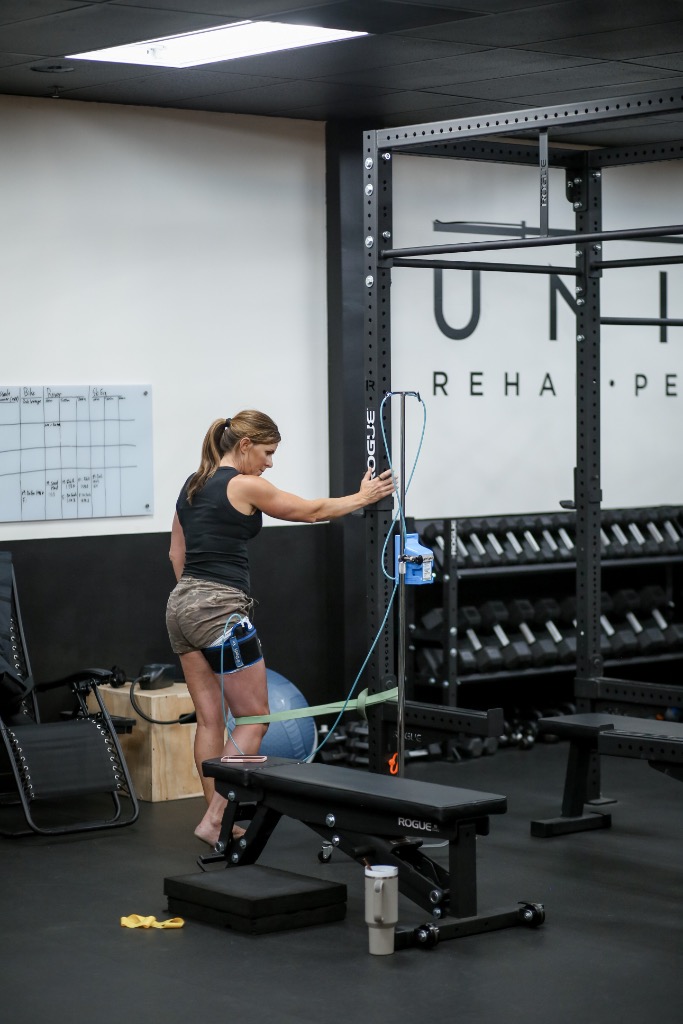
One of the most exciting tools in modern rehabilitation. BFR allows patients to build muscle and strength using significantly lighter loads than traditional strength training.
For painful joints or injuries where heavy lifting isn’t tolerated, BFR helps preserve muscle while minimizing stress on the injured tissue. Maintaining muscle before surgery can make a significant difference during recovery.
We also use a specific pre-surgical protocol to help decrease post-operative pain and promote tissue healing.
If you’re heading into surgery with a nagging tendon injury or chronic soft tissue pain, EPAT Shockwave Therapy can be a valuable addition to your prehab plan.
EPAT uses acoustic waves to stimulate your body’s natural healing response, helping reduce pain and improve tissue quality in chronic tendon and soft tissue injuries. By making movement and strengthening more tolerable, it allows you to get more out of your prehab and head into surgery in a stronger position.
Dry Needling
When appropriate, dry needling can reduce muscle tension, improve movement quality, and decrease pain, allowing you to train more effectively during prehab.
Class IV Laser Therapy
Class IV Laser Therapy is a non-invasive treatment that uses high-powered light energy to stimulate healing at the cellular level through a process called photobiomodulation. By increasing cellular metabolism, reducing inflammation, and decreasing pain, laser therapy helps create an environment where injured tissues can heal more efficiently.
For athletes preparing for surgery, this means less pain, improved tissue health, and a greater ability to participate in the strength and mobility work that truly drives recovery. At UNITE.rehab.perform, we don’t use laser therapy as a standalone treatment. We integrate it with individualized rehabilitation to restore movement, build resilience, and prepare you for the best possible surgical outcome.
Soft Tissue Mobilization
Hands-on treatment can improve tissue mobility, decrease stiffness, and help restore movement so strength training becomes more effective.
None of these treatments replace exercise. They help you get more out of it.
The Research Behind Prehab
This isn’t just a philosophy we believe in. It’s backed by a growing body of orthopedic research.
A 2023 systematic review and meta-analysis published in JAMA Network Open, covering 48 trials and 3,570 patients across orthopedic procedures, found that prehabilitation significantly improved function, quality of life, muscle strength, and pain before surgery compared with usual care. Patients also showed improved function in the short to medium term after surgery. [2]
For ACL reconstruction specifically, research shows that prehab focused on quadriceps strengthening, range of motion, and balance and proprioception work can improve early to mid-term strength and motion after surgery. When there is a delay between diagnosis and surgery, 4 to 6 weeks of prehab has been shown to improve the timing and odds of a successful return to sport. [3]
For hip and knee replacement, a systematic review and meta-analysis of 35 studies and 2,956 patients found that preoperative exercise led to significantly less postoperative pain after hip replacement specifically, along with improved function after both hip and knee replacement, greater quadriceps strength after knee replacement, and a shorter hospital stay after both procedures. [4] In other words, the benefits show up for both joints, but not always in exactly the same way, which is exactly why an individualized plan matters more than a generic one.
Every Surgery Is Different. Every Plan Should Be Too.
Prehab isn’t a generic exercise sheet. Your program should match:
— Your sport
—Your goals
—Your surgery
—Your current strength
—Your mobility limitations
—Your timeline
A competitive CrossFit athlete preparing for shoulder surgery doesn’t need the same program as a recreational tennis player preparing for a knee replacement. That’s why individualized care matters.
Without Prehab vs. With Prehab
Without Prehab
With Prehab
Greater weakness entering surgery
Better strength reserve
More movement compensations
Improved movement quality
Lower confidence
Better understanding of recovery
Reduced mobility
Improved range of motion
Less preparation
Personalized recovery plan
FAQs
How long before surgery should I start prehab?
It depends on the procedure and your timeline, but research on ACL prehab specifically has shown benefit from as little as 4 to 6 weeks when there is a delay before surgery. [3] Earlier is generally better, but even a shorter window can still help.
Does insurance cover pre-operative physical therapy?
Coverage varies by insurance plan and diagnosis. The best way to know for certain is to check directly with your provider or ask our team to help verify your benefits before you begin.
Do all surgeries require prehab?
Not every surgery requires it, but most orthopedic procedures, including ACL reconstruction, rotator cuff repair, and joint replacement, can benefit from it. Even a few weeks of focused preparation can make a meaningful difference in your starting point.
Don't Wait to Start Recovering
Recovery doesn’t begin the day after surgery. It begins the day you decide to prepare for it.
The stronger, more mobile, and more confident you are going into surgery, the better positioned you’ll be coming out.
If surgery is on your calendar, don’t spend the weeks beforehand waiting. Use them to build strength, improve movement, and reduce compensations. Prepare your body, and your mind, for the road ahead.
Because the best post-operative outcomes often start long before the operating room.
Thinking about surgery or already have a procedure scheduled? Our team at UNITE.rehab.perform specializes in helping athletes and active adults maximize recovery before it even begins. Schedule your Prehab Evaluation and we’ll build a personalized plan designed to help you recover faster, move better, and return to doing what you love with confidence.
Demangel R, Treffel L, Py G, et al. Early structural and functional signature of 3-day human skeletal muscle disuse using the dry immersion model. J Physiol. 2017;595(13):4301-4315. doi:10.1113/JP273895.
Punnoose A, Claydon-Mueller LS, Weiss O, Zhang J, Rushton A, Khanduja V. Prehabilitation for Patients Undergoing Orthopedic Surgery: A Systematic Review and Meta-analysis. JAMA Netw Open. 2023;6(4):e238050. doi:10.1001/jamanetworkopen.2023.8050.
Cunha J, Solomon DJ. ACL Prehabilitation Improves Postoperative Strength and Motion and Return to Sport in Athletes. Arthrosc Sports Med Rehabil. 2022;4(1):e65-e69. doi:10.1016/j.asmr.2021.11.001.
Moyer R, Ikert K, Long K, Marsh J. The Value of Preoperative Exercise and Education for Patients Undergoing Total Hip and Knee Arthroplasty: A Systematic Review and Meta-Analysis. JBJS Rev. 2017;5(12):e2. doi:10.2106/JBJS.RVW.17.00015.
UNITE.rehab.perform
Don’t leave it to chance.
Let Denver’s premier team of sports physical therapists and performance coaches lead the way!