
UNITE.rehab.perform
Denver's Best Sports Physical Therapy
Why In-Season Strength Training Isn't Optional (And How Steph Curry Does It)
Written by Francis Huldi, MA, CSCS
You grind all summer, extra reps, extra hours, to show up more athletic for fall and winter tryouts. Then the school year starts, practices ramp up, and the weight room gets abandoned.
Big mistake. In-season strength training isn’t optional, it’s necessary, and it doesn’t look like your summer sessions. It’s shorter, more focused, and built to protect the strength and power you already earned, not chase new gains, without piling onto an already packed schedule.
How In-Season Strength Training Is Different
In-season strength training looks radically different from the off-season. We’re still working to push performance forward, but in-season lifting shifts its main focus toward supporting joint durability, force absorption, and physical capacity, so your body can actually hold up to the demands of a full season, whether that’s six weeks of high school ball or a full college or adult competitive calendar. Coaches feel this too, they’re the ones deciding how much is too much on top of practice. And parents feel it from the sideline, wondering if the summer investment is actually paying off. Everyone’s really asking the same thing: is this athlete actually going to hold up.Shift the Goal: Durability Over Soreness
Here’s what that durability actually requires. Research on detraining shows that general strength typically holds up for the first few weeks of inactivity, but highly trained athletes can see earlier declines in explosive power and sport-specific force production, the qualities that matter most for staying game-ready. [1] By mid-season, without any strength stimulus, that shows up as a flatter vertical jump, slower lateral deceleration, and nagging joint pain that seems to come out of nowhere.
Staying in the weight room, even briefly, supports the structural durability required to survive an entire season.
What Is Strength Training Micro-Dosing?
Maintaining strength doesn’t mean grinding through grueling two-hour sessions that leave your legs feeling like lead on game day.
Take a page out of NBA superstar Steph Curry’s playbook. To stay explosive and injury-free across an 82-game season, Curry relies heavily on micro-dosing his strength work.
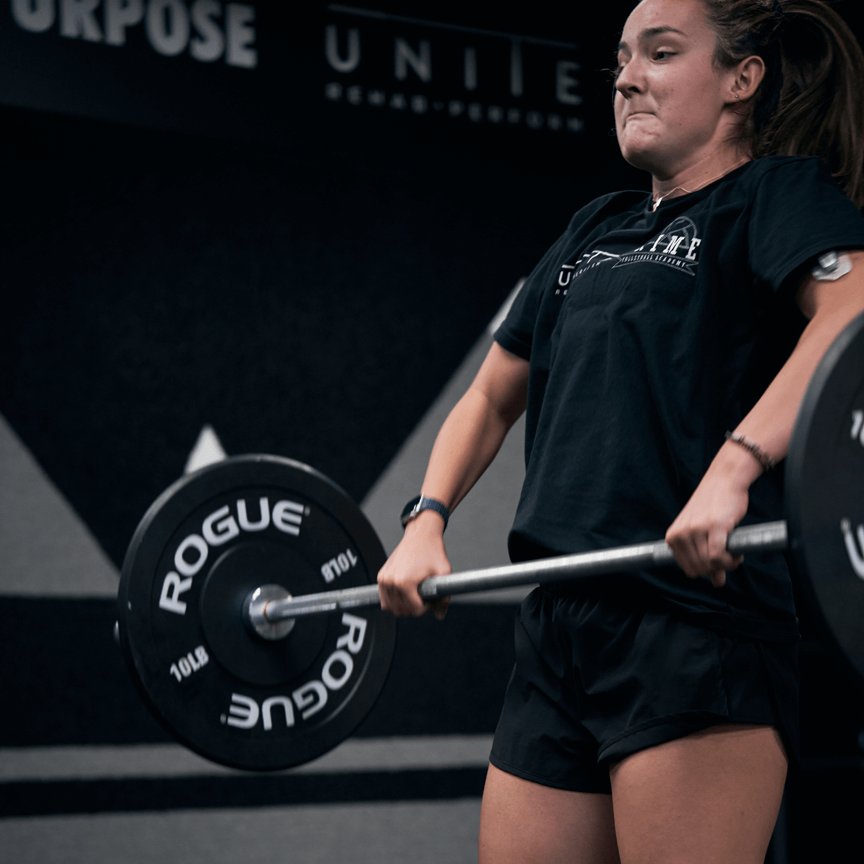
Instead of long, exhausting weight room sessions, micro-dosing involves short, high-intent 15-to-20-minute sessions tacked onto the beginning or end of practice. Focus areas include core stability, single-leg force absorption, and high-velocity movements. This delivers the neuromuscular stimulus needed to prime the nervous system and support movement quality around key joints, all without draining energy tanks or taking away from practice and recovery.
What a 15-Minute In-Season Session Can Look Like
You don’t need a massive block of time. A high-yield in-season session follows a simple three-step structure:
- Step 1: Joint & Movement Prep (3 minutes). Ankle mobility, hip activation, and deceleration drills to prepare tissues for landing impact.
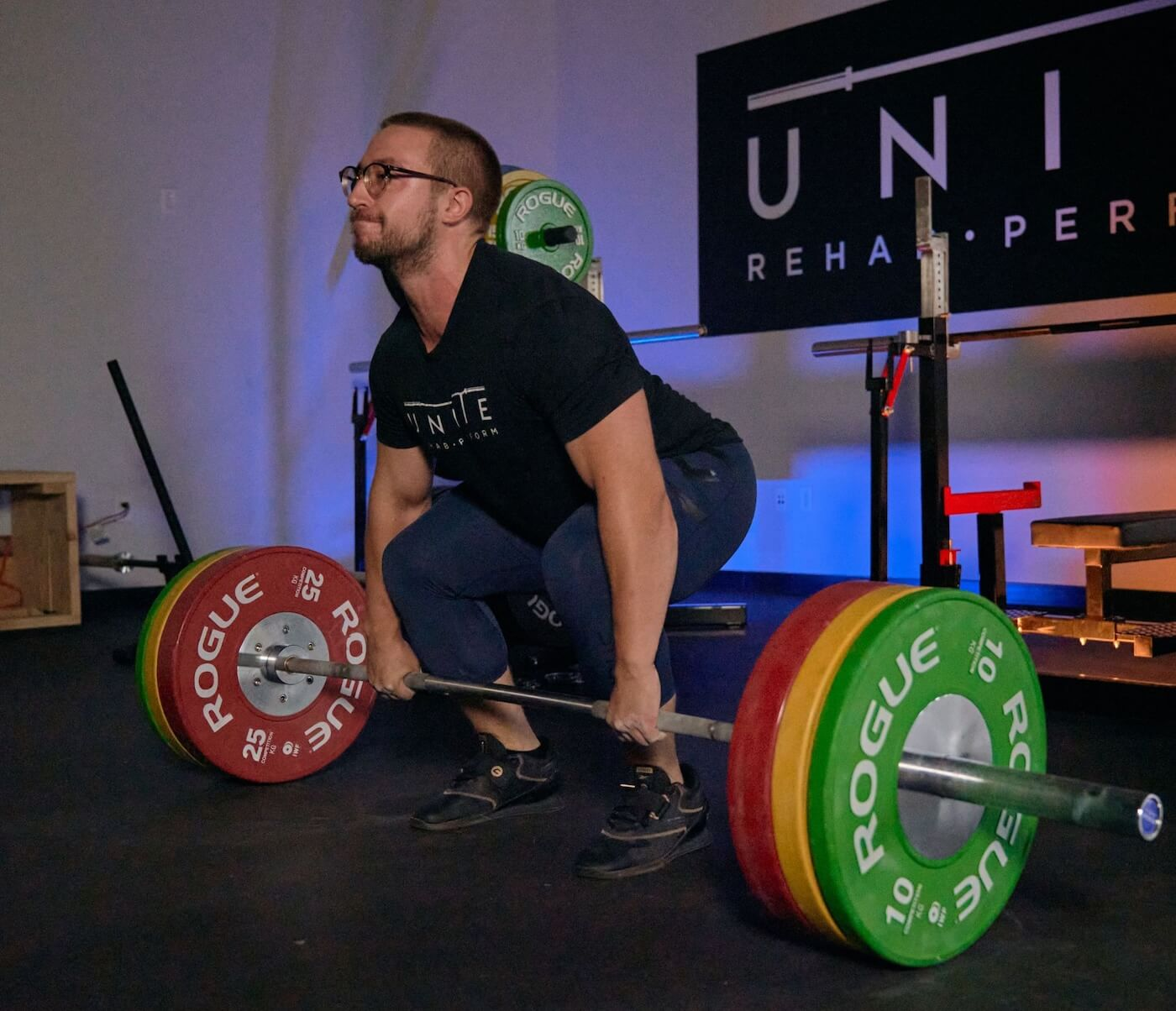
- Step 2: High-Intent Power or Load (7 minutes). 2 to 3 sets of heavy or explosive compound movements, think heavy trap bar deadlifts for low reps, or loaded jump squats. Low volume keeps fatigue near zero while keeping nervous system signaling high.
- Step 3: Multi-Planar Stability (5 minutes). Single-leg stability work and core anti-rotation to support the pelvis, lower back, and knees during lateral cuts.
How Often Should Athletes Lift During Their Season?
There’s no magic number here, and anyone who gives you one without knowing your sport, your schedule, and your training age is guessing. That said, one or two short, low-volume sessions a week covers most in-season athletes. Enough to hold onto what you built all summer, not enough to show up to Friday’s game with dead legs.
How to Monitor Training Readiness
Don’t just go off how you feel walking into the gym. Numbers don’t lie the way your motivation does on a Tuesday in October.
A meaningful drop from your normal baseline, in something like vertical jump or reactive power during mid-week testing, is a real signal worth paying attention to. It doesn’t automatically mean your nervous system is fried. But it does mean fatigue is building faster than you’re recovering from it, and that’s exactly the moment to dial back before a nagging issue turns into a real one. Track your baseline. Don’t just assume you’re fine because nothing hurts yet.
For coaches managing a full roster, the same principle applies at the team level. A handful of simple markers tracked across your athletes tells you a lot more about whether practice volume needs adjusting than how tired everyone looks on a given day.
Keep Your Edge Without Creating More Fatigue
In-season training isn’t about chasing extreme muscle soreness. It’s about keeping your nervous system sharp and your body prepared for whatever the season throws at it, all the way through playoffs.
Not sure how much strength training is appropriate for your season, your sport, or your kid’s schedule? A performance assessment can help determine exactly what an athlete needs to maintain strength and power, without adding unnecessary fatigue to an already demanding calendar.
Key Takeaways
Off-season is for chasing gains. In-season is for protecting them.
- — Training frequency depends on sport, age, schedule, training load, and the individual athlete, not a fixed number that applies to everyone.
- — A meaningful drop in performance testing is worth acting on before it becomes a bigger problem, not after.
- — Micro-dosing works because it delivers real stimulus without competing with practice, recovery, or game readiness.
FAQs
Should athletes lift weights during their season?
Yes, when the program is built for in-season demands. Continuing strength work during the season helps maintain the strength and power built in the off-season and supports an athlete’s ability to handle the physical demands of a full competitive schedule.
Does lifting during the season hurt performance?
Not when it’s programmed correctly. In-season lifting uses lower volume than off-season training specifically to avoid adding unnecessary fatigue, while still providing enough stimulus to maintain strength and power.
What is micro-dosing strength training?
Micro-dosing means trading long training sessions for short, focused ones, often 15 to 20 minutes, built around joint prep, high-intent strength or power work, and stability training. It’s built to fit around a demanding practice and competition schedule without competing with it.
Should athletes lift before or after practice?
There’s no universal rule, but many strength coaches prefer after practice, or a separate session entirely, since your body needs to be fresh for the skill work and technical corrections that happen during practice, not fatigued from the weight room beforehand. If before practice is your only option, keep it short and prioritize movement prep over max-effort lifting so you’re not walking into practice already smoked.
Reference
- Mujika I, Padilla S. Muscular characteristics of detraining in humans. Med Sci Sports Exerc. 2001 Aug;33(8):1297-1303. doi:10.1097/00005768-200108000-00009. PMID: 11474330.
UNITE.rehab.perform
Don’t leave it to chance.
Let Denver’s premier team of sports physical therapists and performance coaches lead the way!
©2020-2025 UNITE.rehab.perform LLC. All rights reserved.
UNITE.rehab.perform does not provide medical advice, diagnosis, or treatment through this website or related content. See additional information.