Close

Overcoming Isometrics: How Pro Athletes Prime the Nervous System for Explosive Performance

Written by Coach Francis, CSCS

If you’ve ever watched a professional athlete warm up and wondered why they’re pushing or pulling hard against something that doesn’t even move, there’s a reason: they’re priming their nervous system.

That maximal effort against a fixed bar, a wall, or a rack pin temporarily helps the body produce force faster — translating directly to better performance in explosive tasks like sprinting, jumping, and throwing. If you’re looking to improve explosiveness or vertical jump, this is one of the most effective and underutilized tools in athlete preparation.

The method is called overcoming isometrics. The performance boost that follows is driven by a well-documented phenomenon called post-activation potentiation (PAP).

This isn’t magic. It’s not a shortcut. And it’s not a replacement for real strength training. It’s a way to express the strength and power you’ve already built more effectively, when it counts, without adding fatigue.

What Are Overcoming Isometrics?

Overcoming isometrics are maximal-effort contractions performed against an immovable object to stimulate the nervous system and improve explosive performance.

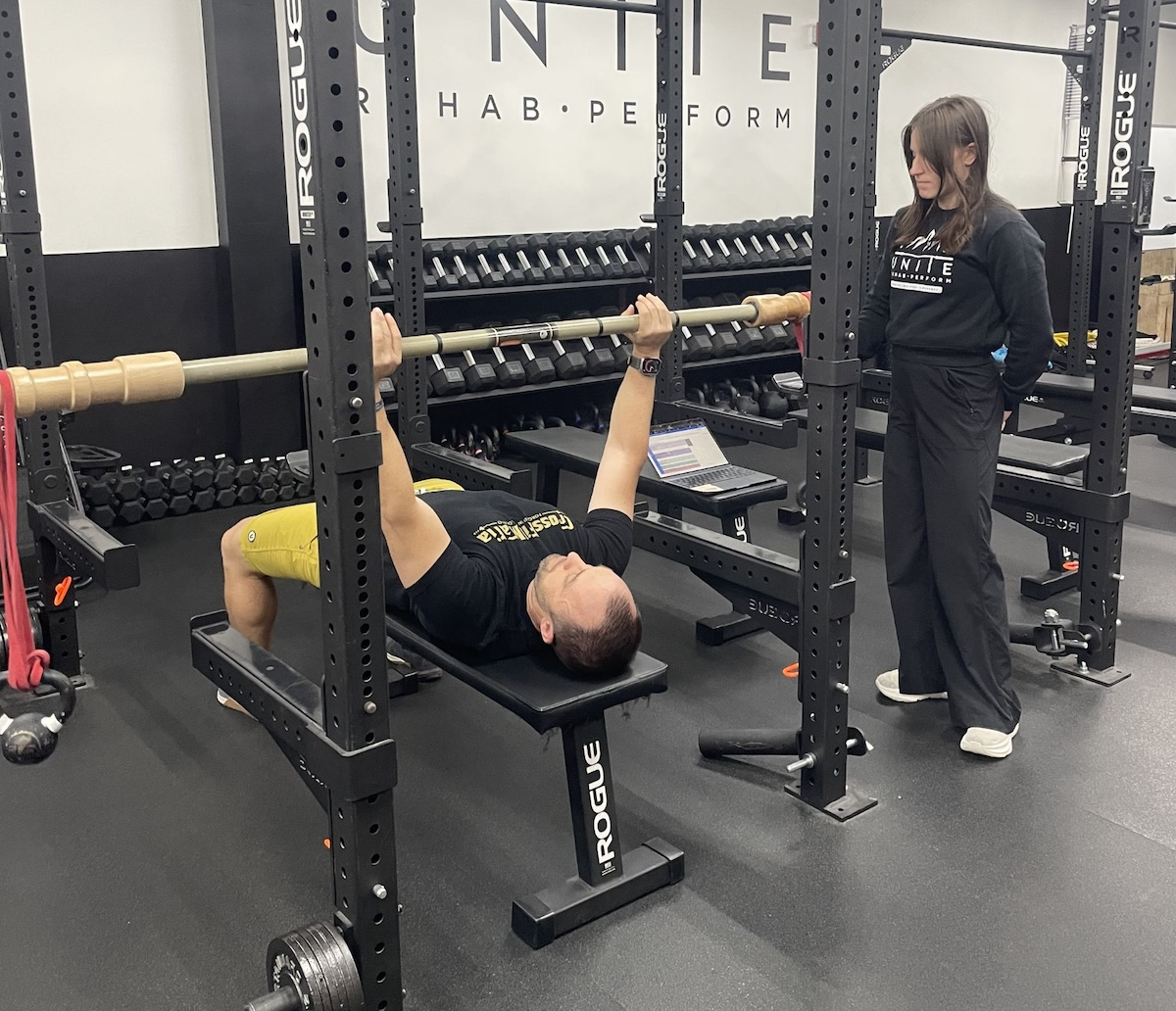
Think pushing against a fixed bar, pulling against pins in a rack, or driving into a wall with everything you have. The object doesn’t move. You don’t move. But the muscular and neural demand is extremely high.

Unlike traditional strength training where movement and mechanical output drive adaptation, overcoming isometrics are defined by:

  • — Maximum intent with no visible movement
  • — High nervous system demand
  • — Minimal mechanical fatigue when dosed correctly

Because nothing moves, you can generate elite-level effort without grinding through reps or accumulating the kind of fatigue that blunts performance.

Why Overcoming Isometrics Boost Explosive Performance

Explosive actions like sprinting, jumping, cutting, and throwing depend on two things: 

  1. 1. How much force you can produce
  2. 2. How fast you can produce it. 

Most athletes have more strength than they can actually access in the moment. Overcoming isometrics help close that gap.

When you push or pull at maximum effort against a fixed object, your nervous system responds by recruiting more muscle fibers, increasing the rate of muscle activation, and improving coordination of force output. That temporary neural spike is what makes athletes feel more springy, reactive, and powerful immediately afterward.

Think of it like revving an engine before a race. The car isn’t moving yet, but everything under the hood is firing at full capacity.

Post-Activation Potentiation (PAP): The Science Behind the Effect

Post-activation potentiation (PAP) is the short-term improvement in power output following a high-intensity muscle contraction.

In practical terms: a maximal effort primes the nervous system, and the explosive movement that follows becomes more powerful as a result. That’s why overcoming isometrics are almost always paired with a fast movement immediately after, such as:

  • —Sprints
  • —Vertical jumps
  • —Medicine ball throws
  • —Plyometrics
  • —Light, fast Olympic lift variations

The goal is not fatigue. The goal is activation. PAP only works when the nervous system is fresh enough to express it, which is why dosing and rest are critical.

Who Should Use Overcoming Isometrics?

This method is relevant across a wide range of athletes and training contexts:

Court and field sport athletes (basketball, volleyball, soccer, football) looking to be more explosive off the line, in the air, or through a cut

Strength and power athletes who want to convert gym strength into real-world speed and reactivity

Coaches building pre-competition warm-up protocols or contrast training blocks

Any athlete who has hit a plateau in their speed or power development despite consistent strength training

If you can produce force but struggle to express it quickly in sport, this is a tool worth adding to your preparation.

When to Use Overcoming Isometrics

Timing matters. Overcoming isometrics work best as a primer, not a primary training stimulus.

Use them:

  • — Before speed or power training sessions to elevate the quality of every rep that follows
  • — Before games or competition as part of a structured warm-up
  • — Within contrast training blocks, paired directly with a matched explosive movement

Avoid using them:

  • — As a standalone strength workout — they build activation, not structural strength
  • — At high volume — more is not better here, and fatigue will cancel out the benefit
  • — When already fatigued — the PAP effect requires a fresh nervous system to work

How to Perform Overcoming Isometrics

Execution is straightforward. The intent is everything.

Setup: Position yourself against an immovable object — a fixed barbell in pins, a wall, a door frame, or the floor depending on the movement pattern

Effort: Push or pull with absolute maximum intent. This is not a moderate effort. Every rep should be as hard as you can produce

Duration: Hold each effort for 3 to 5 seconds. Longer than that and you accumulate fatigue faster than benefit

Volume: 2 to 4 reps per position is sufficient

Rest: Take full rest between efforts — 60 to 90 seconds minimum — before moving into the paired explosive movement

The moment the effort drops below maximal, the stimulus drops with it.

Example Pairings (Isometric to Explosive)

The most effective approach matches the isometric position to the explosive movement that follows:

Isometric mid-thigh pull paired with a vertical jump or trap bar jump

Isometric split squat paired with a sprint start or acceleration drill

Isometric chest press or push paired with a medicine ball chest throw

Isometric Romanian deadlift paired with a broad jump or horizontal bound

The closer the joint angles and movement patterns match between the isometric and the explosive exercise, the more targeted the PAP effect will be.

Common Mistakes to Avoid

Overcoming isometrics are simple in concept but easy to misuse:

Treating it like conditioning — high volume and short rest will create fatigue, not activation

Sub-maximal effort — a 70% push produces a fraction of the neural response. Every rep needs to be an all-out attempt

Holding too long — efforts beyond 5 to 6 seconds shift the demand away from neural activation and toward muscular endurance

Skipping the explosive pairing — the isometric alone is only half the equation. The PAP effect is realized through the movement that follows

Poor rest between efforts — rushing the rest period is the fastest way to turn a performance primer into a fatigue session

Overcoming Isometrics Don't Replace Strength. They Unlock It.

The athletes who get the most out of overcoming isometrics are the ones who have already put in the strength work. This tool does not build a foundation — it helps you access what’s already there, more completely and more quickly than you could without it.

Used consistently and correctly, overcoming isometrics can help you sprint faster, jump higher, and throw harder. But they work because of the training behind them, not instead of it.

If you’re ready to build a complete speed and power program around methods like this, a performance assessment at UNITE is the place to start. We’ll evaluate how you move, identify what’s limiting your explosive output, and build a training plan that translates directly to your sport.

Book Your Performance Assessment →

Don’t leave it to chance.

Let Denver’s premier team of sports physical therapists and performance coaches lead the way!