Close

Train for Life, Not Just the Gym:
How the One-Trip Rule Builds Real-World Strength

You pull into the driveway. You open the trunk. You stare at six grocery bags.

And without thinking, you commit.

One trip.

It’s a joke most of us share. But it quietly exposes something bigger. Functional strength for daily life is not built by accident. It is built by practicing the movements your body actually needs outside the gym.

Carrying groceries. Lifting a suitcase into the overhead bin. Picking up your kid. Hauling mulch. Climbing stairs while holding something awkward.

Those demands do not disappear as you age. If anything, they matter more.

If you want to stay capable, confident, and independent, you have to train for real-world strength on purpose.

Here are the three movement patterns that make the one-trip rule possible now and 20 years from now.

Carry Variations: Train for Real-Life Loads

How can you carry real-life loads safely?

Carrying is one of the most underrated strength skills. It challenges grip, posture, core stability, and balance all at once. There is nothing isolated about it. Your entire body has to coordinate.

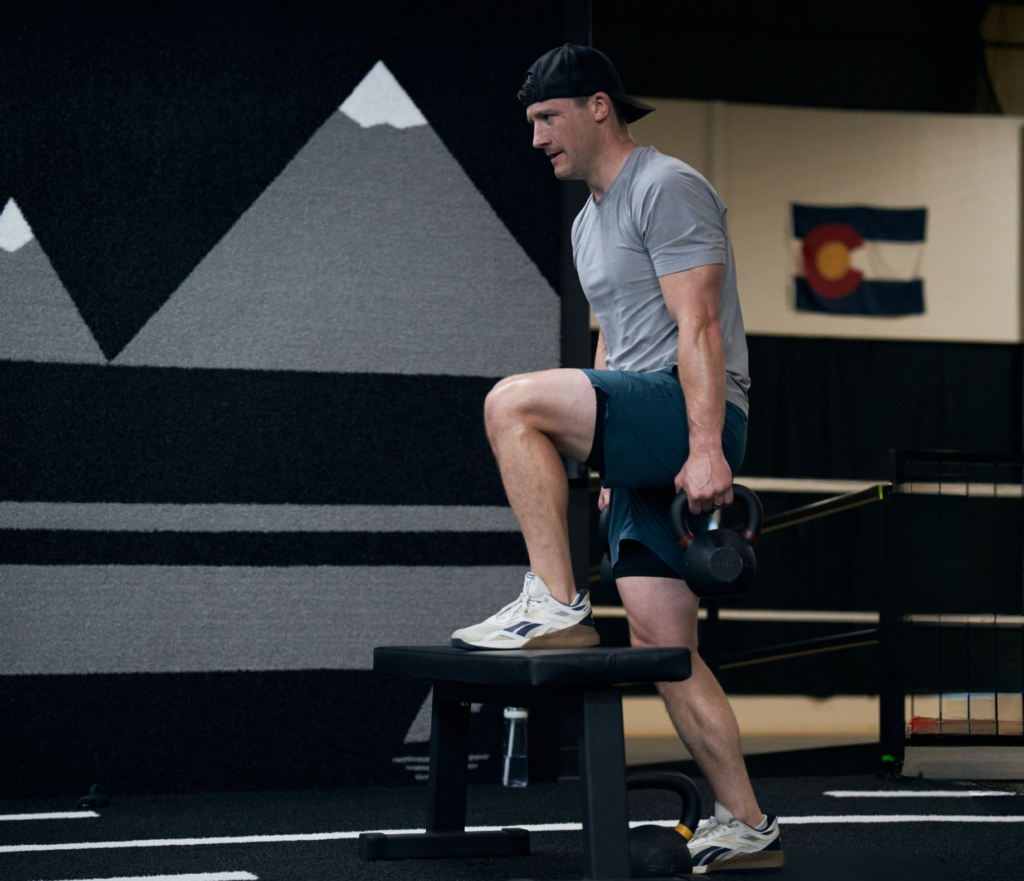
Different carry variations prepare you for different real-life situations:

Suitcase Carry

Weight held at your side.
Builds grip strength and teaches your core to resist leaning.
Exactly what you need for groceries or luggage.

Front or Goblet Carry

Weight held in front of your body.
Forces you to brace and stay tall.
Think carrying a box or holding a child.

Offset Carry

Uneven load.
Improves balance and teaches your body to stabilize when life is not symmetrical.

The truth is this: if your grip gives out or your posture collapses, everything else follows.

Tip: Start lighter than your ego wants. Walk tall. Control your breathing. Then gradually increase load over time.

If you want the one-trip grocery rule to feel effortless, train carries intentionally.

Squat Variations: Stay Strong and Mobile

Why are squats important outside the gym?

Because life constantly asks you to get down and get back up.

You squat when you sit. You squat when you stand. You squat when you pick something off the floor. You squat when you garden. You squat when you play with your kids.

If that movement feels stiff or unstable, daily life starts to feel harder than it should.

Squat variations that matter:

  • — Goblet squats
  • — Box squats
  • — Split squats
  • — Controlled tempo squats

These are not just leg exercises. They build balance, joint control, and confidence.

Strong legs are not about aesthetics. They are about autonomy. The ability to lower yourself with control and stand back up without hesitation is one of the clearest markers of long-term independence.

If stairs feel harder than they used to or getting off the floor feels awkward, your body is asking for more strength and mobility.

Hinge Patterns: Protect Your Back and Build Balance

How do hinge patterns protect your back?

Most people bend from their spine instead of their hips. That habit works… until it doesn’t.

A proper hinge teaches you to:

  • — Drive movement from your hips
  • — Keep your spine stable under load
  • — Distribute force through stronger muscle groups

This is what protects your back when lifting something heavier than expected.

Exercises that build hinge strength include:

  • — Romanian deadlifts
  • — Kettlebell deadlifts
  • — Hip bridges
  • — Single-leg hinges

If you have ever tweaked your back lifting something light, it was rarely the object’s fault. It was a breakdown in movement strategy.

Tip: Think “hips back” before you bend forward. Let your hips initiate the motion, not your lower back.

Train this pattern now so daily lifting never feels risky.

How Do You Train for Real-Life Strength?

You do not need complicated programming. You need consistency with meaningful patterns.

Each week, ask yourself:

Did I carry something challenging?
Did I squat with control and depth?
Did I hinge properly under load?

That simple framework builds real-world resilience.

When you regularly expose your body to carries, squats, and hinges, you are teaching it to:

  • — Stabilize uneven loads
  • — Control posture under stress
  • — Lift safely
  • — Maintain balance

This is how you future-proof your body without overcomplicating your training.

Quick Recap: The One-Trip Strength Formula

If you remember nothing else, remember this:

Carry to build stability and grip.
Squat to maintain mobility and independence.
Hinge to protect your back and build lifting power.

These are not gym exercises. They are life exercises.

The Bottom Line

The one-trip rule might start as a joke, but the ability to move, lift, and carry confidently is serious business.

Training should not just prepare you for a workout. It should prepare you for your life.

At UNITE.Rehab.Perform, we focus on practical, full-body movement training that builds strength you can actually use. Through thoughtful assessment and intentional programming, we help you stay capable, not just active.

If you want to build strength that carries over into daily life and keeps you independent for decades, schedule a consultation and let’s build a plan around the movements that matter.

Because being fit is great.

Being capable is better.

Don’t leave it to chance.

Let Denver’s premier team of sports physical therapists and performance coaches lead the way!