UNITE.rehab.perform
Denver's Best Sports Physical Therapy
The Riding Injury You’re Ignoring: Hip Pain That Won’t Go Away
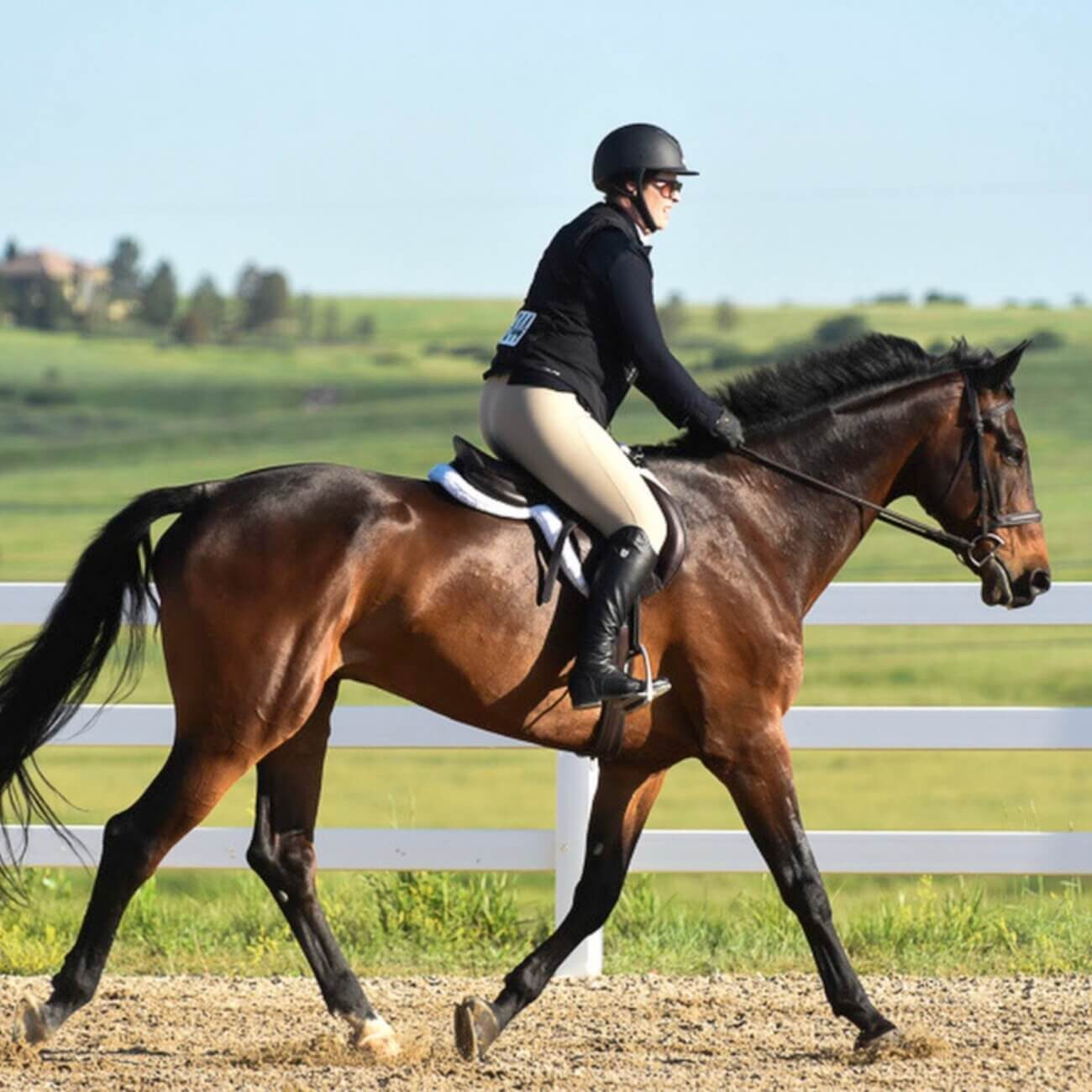
If you ride long enough, you’ve almost definitely felt it.
That pinch in the front of your hip.
The ache after a long schooling session.
The leg that simply will not “drop,” no matter how many times your trainer says it or how many stretches you do before mounting.
Hip pain shows up differently for every rider, but here’s the real secret most equestrians never hear: this isn’t just about tight hip flexors. It’s not even just about your hips. It’s about how your entire body moves in the saddle.
And if you’ve been stretching for weeks with little to no improvement, there’s a reason for that.
What’s Really Causing the Pain
“Hip pain while riding” is rarely caused by the hip alone. In most riders, it comes from a combination of:
- — Limited hip rotation, especially internal rotation
- — Weak glutes (leaving hip flexors to do the heavy lifting)
- — Uneven seat bone loading
- — Pelvic bracing instead of controlled stability
- — Stiffness in the spine or ankles that forces the hip to compensate
These issues are movement problems, not “stretching problems.”
And because they’re unique to riders, traditional physical therapy often misses them.
Signs Your Hips Are Limiting Your Ride
If any of these sound familiar, your hips are likely the limiting factor:
- — Pinching during sitting trot
- — Feeling like one stirrup always hangs lower
- — Hip flexors that fatigue way too quickly
- — Difficulty staying square in the saddle
- — Struggles with lateral work
- — One lead or direction that always feels harder
These are not just “riding quirks.” They’re symptoms.
Why Stretching Isn’t Fixing It
Most riders assume stretching is the solution. But here’s the truth:
- — A muscle can feel tight because it’s doing too much
- — A chronically lengthened muscle can still feel stiff
- — Asymmetry won’t disappear because you hold a stretch longer
- — Without strength and control, flexibility does nothing for your ride
Your hips don’t need to be looser.
They need to be stronger, more stable, and more coordinated.
Exercises We Recommend for Riders With Hip Pain
90/90 Hip Rotations to Tall Kneel
Develops rotational mobility that directly supports better balance and leg positioning.
Half-Kneeling Hip Flexor Lift-Offs
Reduces gripping and helps your hip flexors support movement instead of trying to control everything.
Lateral Step-Downs
Improves single-leg stability so your seat bones stay even and your hips stop overworking.
Lateral Lunges with Adduction Bias
Trains the lateral hips while teaching your pelvis to stay controlled as you move.
These aren’t “random exercises.” They’re targeted tools that address why your hip hurts, not just where.
Ride With Less Pain, More Balance, and Better Connection
If your hip pain has become the thing that holds you back, or if you’ve been told “just stretch more” without real change, it’s time to look deeper.
At UNITE.rehab.perform, we help riders understand where their pain is coming from and how to fix it through rider-specific biomechanics, mobility work, and strength training that actually transfers to the saddle.
A Total Body Movement Analysis will help you identify:
- — Which areas are actually limited
- — What’s compensating
- — What your hips need to stay pain-free
- — How your body is affecting your position, balance, and aids
You don’t have to guess anymore.
You don’t have to push through pain.
You don’t have to settle for “this is just how my hips are.”
You can ride better — without nagging pain distracting you from the partner you want to be for your horse.
Ready to figure out what your hips need?
You don’t have to push through pain. Your next great ride starts with understanding your body.
Schedule a Total Body Movement Analysis at UNITE and get back to riding with ease and confidence.
©2020-2025 UNITE.rehab.perform LLC. All rights reserved.
UNITE.rehab.perform does not provide medical advice, diagnosis, or treatment through this website or related content. See additional information.