
UNITE.rehab.perform
Denver's Best Sports Physical Therapy
The Small Habits Your 60-Year-Old Self Will Thank You For
Written by Dr. Victoria, PT, DPT
None of these choices seem important in those moments.
But your body keeps score, not because one bad decision ruins your health, but because thousands of repetitions of those same habits can shape how you move, feel, and perform.
The good news? The opposite is also true.
Small, sustainable habits repeated over years can help you maintain strength, mobility, resilience, and confidence well into your 60s and beyond.
So what does it actually take to age well? Mostly, it’s the everyday stuff: moving often, strength training consistently, addressing recurring pain early, preparing your body for the activities you love, and treating sleep and recovery as part of training.
None of it requires a perfect routine. It requires consistency.
Here are 10 habits your future self may thank you for.
1. Don’t Sit in the Same Position All Day
Your body was designed to move! Not to spend eight to ten hours in one position.
Whether you’re working at a desk, driving, studying, or spending the day on your feet, staying in one position for prolonged periods can contribute to stiffness and discomfort.
The solution doesn’t necessarily require a standing desk or an elaborate mobility routine…it’s actually simpler than you might think.
Change positions. Move frequently.
Stand up during a phone call. Walk around between meetings. Take a few minutes to stretch. If you’ve been sitting for an hour, get up and do something different.
The goal isn’t to find the “perfect” position.
It’s to avoid being stuck in the same position all day.
2. Make Your Workstation Work for You
Poor workstation setup rarely causes an immediate injury. That’s part of the problem.
You can spend days, months, or even years working from an uncomfortable chair, craning your neck toward a screen, or reaching awkwardly for a keyboard without thinking much about it. Over time, that can show up as a stiff neck or achy shoulders.
Your workstation just needs some love. A good ergonomic setup should allow you to work comfortably and change positions throughout the day.
Consider:
- — Keeping your monitor at eye level.
- — Positioning your keyboard and mouse so your shoulders can stay relaxed.
- — Using a chair that provides adequate support and has armrests.
- — Keeping frequently used items within easy reach.
- — Alternating between sitting and standing when possible.
And remember: good ergonomics isn’t about freezing yourself into one “correct” posture.
It’s about creating an environment that makes movement and position changes easier.
3. Take Movement Breaks (or “Exercise Snacks”) Before You Need Them
You don’t have to wait until your back hurts to get up.
Short movement breaks throughout the day can be much more realistic than trying to undo eight hours of inactivity with one intense workout. Some researchers call these “exercise snacks” or “movement snacks,” and the name fits. They’re small, quick, and they add up.
Try setting a reminder every 30 to 60 minutes to stand up, walk around, or perform a few simple movements.
Even a couple of minutes can interrupt long periods of inactivity.
Think of it as physical maintenance.
You wouldn’t drive your car for thousands of miles without maintenance and expect it to perform perfectly. Your body deserves some attention, too.
4. Stop Treating Strength Training Like It’s Optional
Strength isn’t just for athletes or people trying to build muscle.
It’s one of the foundations of long-term physical independence.
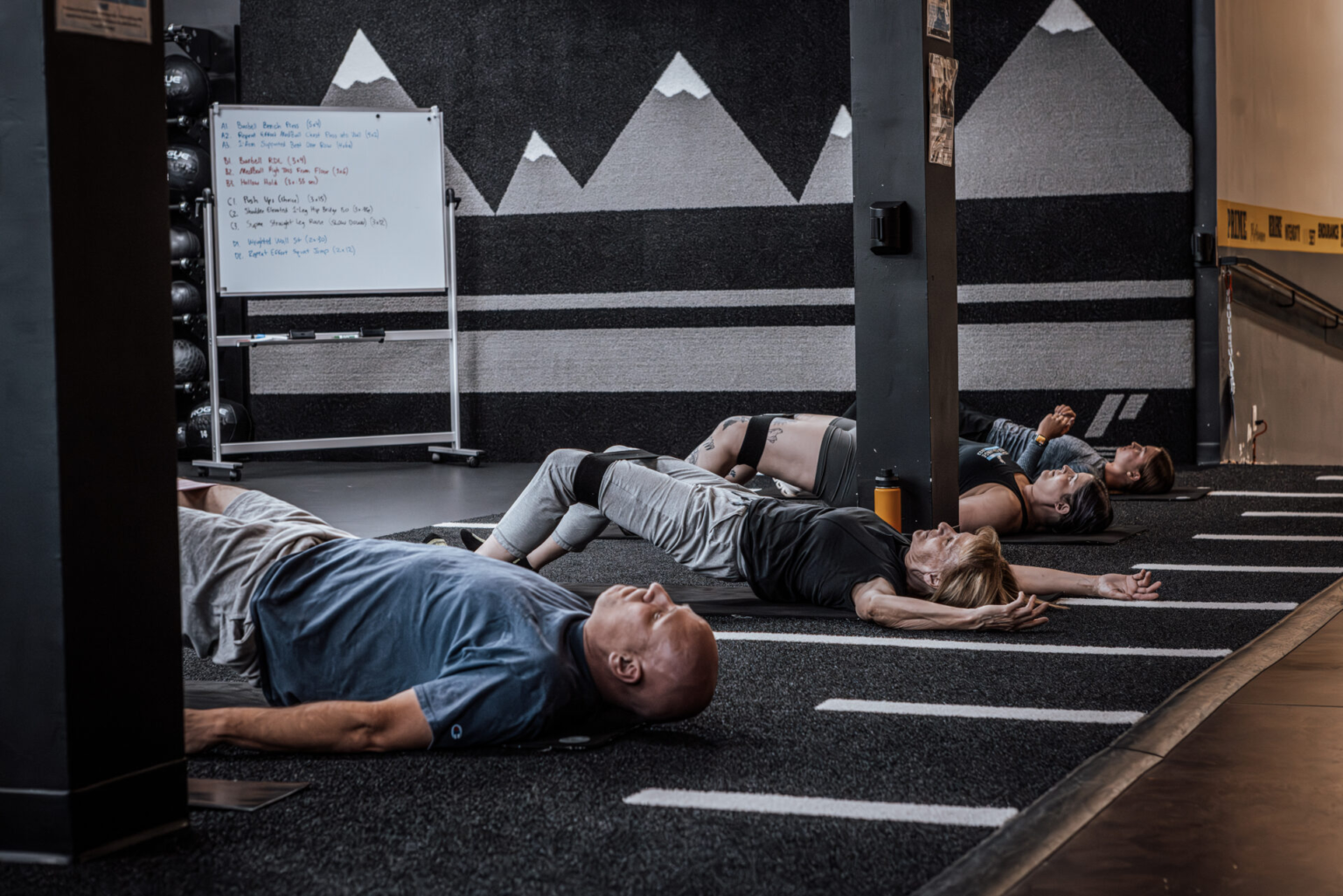
Maintaining strength can help you continue doing the things you need to do daily and the things you enjoy…lifting groceries, climbing stairs, traveling, playing with your kids or grandkids, hiking, participating in recreational sports, and getting up and down from the floor.
Muscle mass and strength naturally decline as we age, a process called sarcopenia. Strength training is one of the best-supported ways to slow it down, and it helps protect your balance and bone density along the way.
You don’t have to become a powerlifter.
You simply need to give your body a consistent reason to remain strong. For most adults, including older adults, the WHO and CDC recommend muscle-strengthening activity at least two days a week.
A well-rounded program might include movements such as:
- — Squatting
- — Hinging
- — Pushing
- — Pulling
- — Carrying
- — Rotating and resisting rotation
- — Single-leg movements
The right program depends on your goals, training history, injuries, and current abilities. And it should get a little more challenging as you get stronger.
The important part is consistency.
Your future self doesn’t need you to train perfectly. Your future self needs you to keep training.
Not sure where to start? We’ll build a plan around your goals and your busy schedule. Talk With Our Team
5. Don’t Ignore the Ache That Keeps Coming Back
An occasional ache isn’t necessarily a reason to panic.
But when the same pain keeps returning every time you walk, run, lift, play, or train, it’s worth paying attention.
Many people fall into a frustrating cycle:
Pain → rest → feels better → return to activity → pain comes back.
If that keeps happening, the problem is likely not that you need to stop exercising forever. You may need to understand what’s contributing to the symptoms and modify how you’re loading the body.
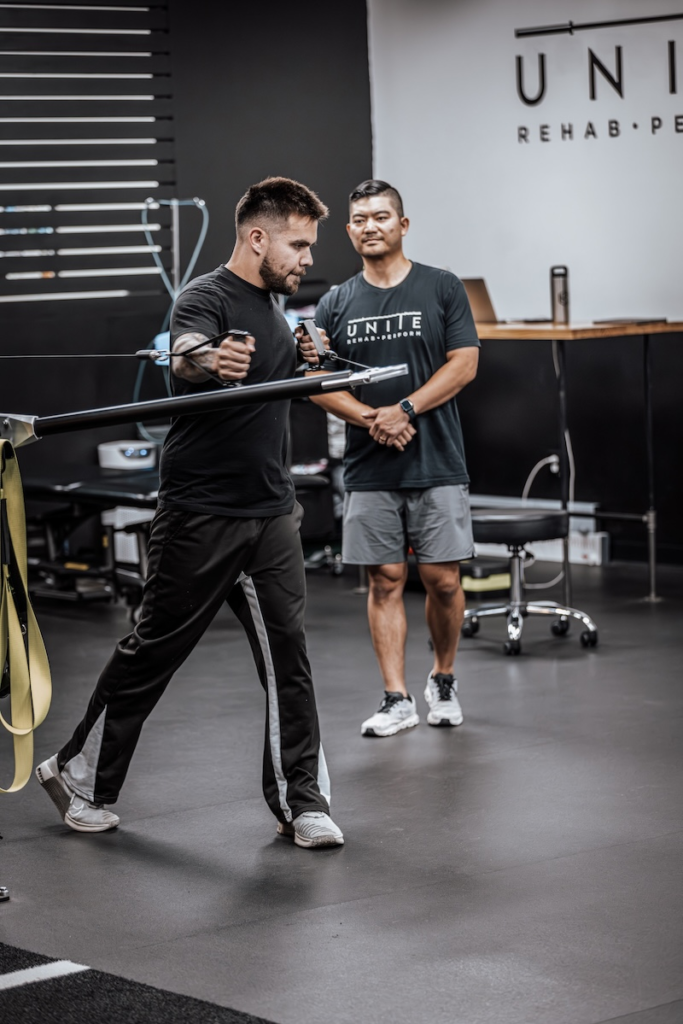
Our sports performance physical therapists can help evaluate movement, strength, mobility, training load, technique, and other factors that may be contributing to recurring symptoms.
Sign up for your FREE movement assessment today!
6. Choose Shoes That Support What You’re Asking Your Feet to Do
Shoes aren’t magic, and there’s no single “best” shoe for everyone.
But wearing footwear that’s excessively worn, uncomfortable, or poorly suited for your activity can make exercise less enjoyable, and that discomfort can change the way you move.
If your shoes are worn down, causing discomfort, or no longer appropriate for the activity you’re doing, it may be time for a replacement.
And if you’re experiencing persistent foot, ankle, knee, or hip symptoms, don’t assume changing shoes alone will solve the problem.
Sometimes the better solution is figuring out why you’re having the problem in the first place.
7. Take the Stairs Sometimes
You don’t have to turn every trip to the third floor into a workout.
But opportunities for movement are everywhere.
Taking the stairs, walking to a nearby destination, parking a little farther away, or taking a short walk after lunch can all add physical activity to your day.
These small choices may seem insignificant.
That’s exactly why they matter.
You don’t need every movement opportunity to be a workout. You simply need to stop treating movement as something that only happens when you’re at the gym.
8. Don’t Become a “Weekend Warrior” by Accident
If you’re mostly sedentary Monday through Friday and then attempt to cram all your exercise into Saturday and Sunday, your body may have a harder time adapting to the workload. That mismatch is behind a lot of weekend warrior injuries.
This doesn’t mean weekend exercise is bad.
It means your weekly activity should ideally match your body’s preparation for it.
If you want to play recreational soccer on Saturday, for example, regular strength training, walking, mobility work, or conditioning during the week can help prepare you for that demand. So can a proper warm-up before you play.
The same goes for seasonal sports. If you’re hitting the slopes this winter, getting your body ready for winter sports starts weeks before your first run.
The goal is to build a body that is ready for the activities you enjoy, not one that gets surprised by them every weekend.
9. Treat Sleep and Recovery as Part of Training
Exercise is a stressor, and your body needs adequate recovery to adapt to that stress.
Sleep, nutrition, rest days, stress management, and appropriate training volume all influence how well you recover. That only becomes more true with age, which is why recovering well after 40 takes a little more intention.
If you’re constantly tired, sore, or struggling to perform, adding more exercise isn’t always the answer.
Sometimes the missing piece is recovery.
Your 60-year-old self may not remember every workout you completed. But it will appreciate the years you spent learning how to balance training with recovery.
Your Future Body Is Being Built Today
It’s easy to think of physical decline as something that simply happens with age.
Aging is inevitable. Losing the ability to move, train, compete, and participate in the activities you love isn’t necessarily inevitable.
Your body adapts to what you consistently ask it to do.
If you consistently sit, your body becomes accustomed to sitting.
If you consistently move, strengthen, recover, and challenge yourself appropriately, you’re giving your body a different set of instructions.
That’s why the goal isn’t perfection.
It’s repetition.
A few minutes of movement today.
A strength workout this week.
Going to bed a little earlier tonight.
Addressing that recurring ache instead of ignoring it.
Replacing those worn-out shoes.
Taking the stairs when you can.
Over time, these small choices add up.
And one day, your 60-year-old self may be very glad you made them.
Key Takeaways
- — Physical decline usually builds gradually from everyday habits. So does resilience.
- — Move often. Change positions, take short exercise snacks, and grab the small chances to be active.
- — Strength train at least two days a week. It’s a foundation of long-term independence, not an extra.
- — Get recurring pain checked out, and prepare during the week for what you do on the weekend.
- — Sleep and recovery aren’t time off from training. They’re part of it.
Frequently Asked Questions
Is sitting all day bad if I exercise regularly?
Yes, it can be. A structured workout is valuable, but it doesn’t completely offset prolonged periods of inactivity. Regular movement breaks can complement your exercise routine and help you avoid spending most of your day in one position.
What are exercise snacks?
Exercise snacks are short bursts of movement, often just a minute or two, spread throughout your day. A few squats between meetings, a quick walk after lunch, or a couple of mobility drills all count. On their own they’re small, but they break up long stretches of sitting and add up over time.
Is strength training safe as I get older?
For most people, strength training can be an important part of healthy aging. The appropriate exercises, intensity, and progression should be based on your current fitness level, goals, and any existing limitations. If you’re unsure where to start, a physical therapist or qualified fitness professional can help you develop an appropriate plan.
How often should I strength train as I get older?
The WHO and CDC recommend muscle-strengthening activity at least two days a week for adults, including older adults, working all the major muscle groups. If you’re just starting out, two sessions a week is a great place to begin. Consistency matters more than any single workout.
Is it too late to start strength training at 50 or 60?
Not at all. Strength training over 50 can still build real, meaningful strength, and people keep making gains well into their 60s, 70s, and beyond. The key is starting at the right level for you and progressing gradually, ideally with some guidance if you’re new to lifting or working around past injuries.
What are the best exercises for aging well?
There’s no single best exercise, but a well-rounded program covers the basics: squatting, hinging, pushing, pulling, carrying, rotating and resisting rotation, and single-leg work. Pair that with regular walking or other conditioning, and you’ve built a strong foundation for longevity: staying strong, mobile, and capable for decades.
How do I avoid weekend warrior injuries?
Match what you do during the week to what you ask of your body on the weekend. Strength training, walking, mobility work, and conditioning on weekdays help your body handle weekend sports, and a good warm-up before you play gives you an extra layer of protection.
Should I stop exercising if something hurts?
Not necessarily. Pain doesn’t automatically mean you need complete rest, but persistent, worsening, or recurring pain deserves attention. A physical therapist can help determine what may be contributing to your symptoms and whether you need to modify your activity.
When should I see a physical therapist for recurring pain?
If the same ache keeps coming back, lingers for more than a couple of weeks, gets worse with activity, or starts changing the way you move, it’s worth getting evaluated. You don’t need to wait for a major injury. The sooner you understand what’s driving it, the easier it usually is to address.
Can physical therapy help if I don’t currently have an injury?
Absolutely. Physical therapy isn’t only for recovering from injuries. A sports performance physical therapist can also help identify strength, mobility, movement, or training limitations and develop a plan to help you perform better and reduce your risk of future problems.
Ready To Start Building?
Whether you’re getting back into strength training, returning to a sport, or just want to move better for the long haul, our team can help. Your free movement assessment is one-on-one time with us to see how you move today and build a plan that fits your goals and your life. Book your free movement assessment
Don’t leave it to chance.
Let Denver’s premier team of sports physical therapists and performance coaches lead the way!
©2020-2025 UNITE.rehab.perform LLC. All rights reserved.
UNITE.rehab.perform does not provide medical advice, diagnosis, or treatment through this website or related content. See additional information.