Close

Get Stronger Without Heavy Weights: How Blood Flow Restriction (BFR) Training Helps

Written by Dr. Victoria Riester, PT, DPT Performance Physical Therapist at UNITE.rehab.perform | BS Exercise Science, Ball State University | Doctorate in Physical Therapy, Governors State University

What if you could build real strength using a fraction of the weight you’d normally lift and still get results that actually show up in your performance?

Blood Flow Restriction (BFR) training makes that possible. It’s one of the most effective tools in sports performance physical therapy and injury rehabilitation today, because it allows athletes and active adults to build strength and muscle using significantly lighter resistance. Less joint stress, faster recovery, and real strength gains. At UNITE, BFR is part of how we bridge the gap between rehab and full performance.
What Is Blood Flow Restriction (BFR) Training?

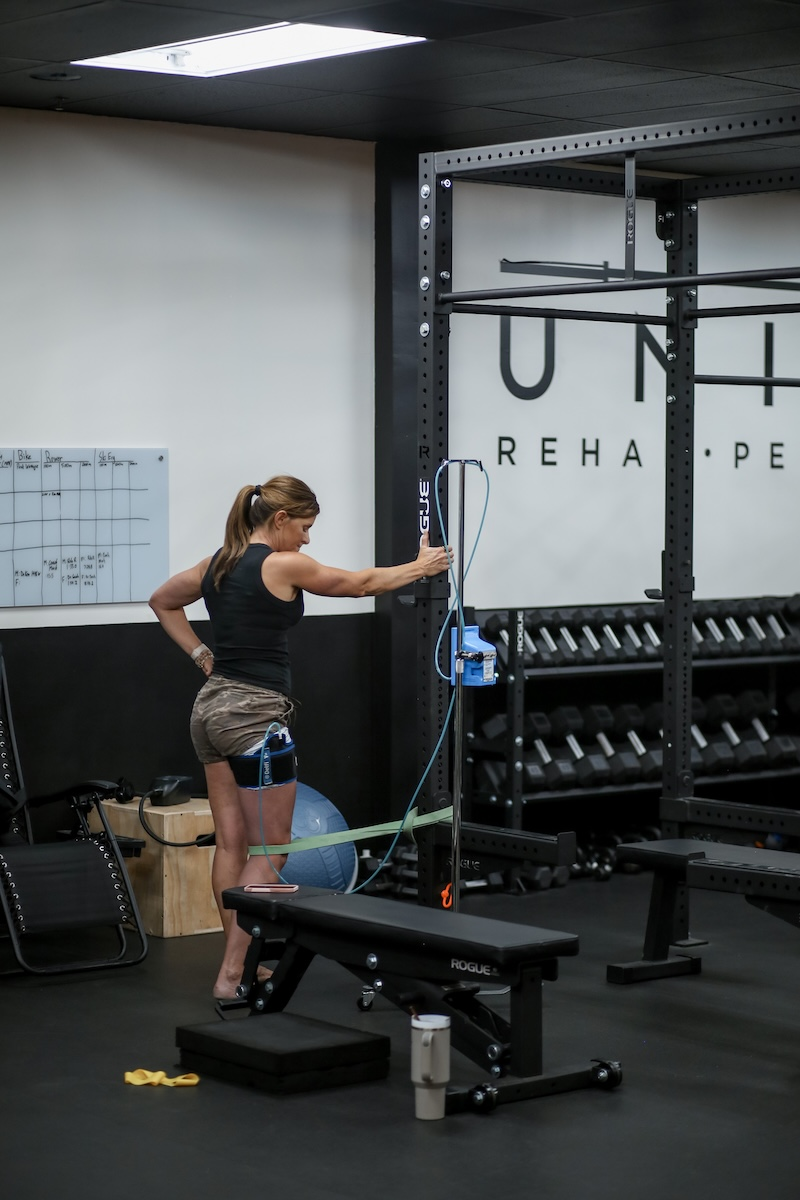
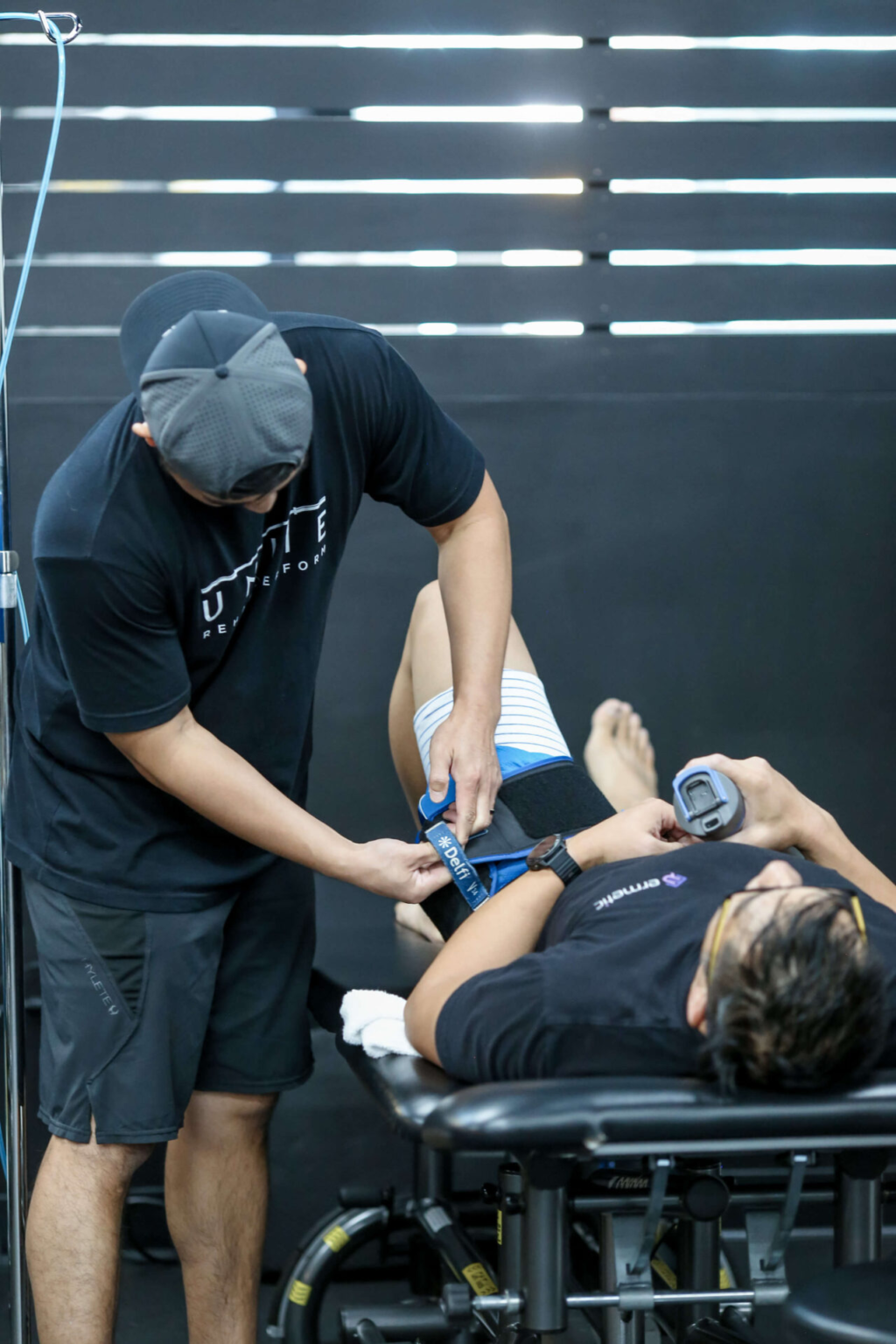
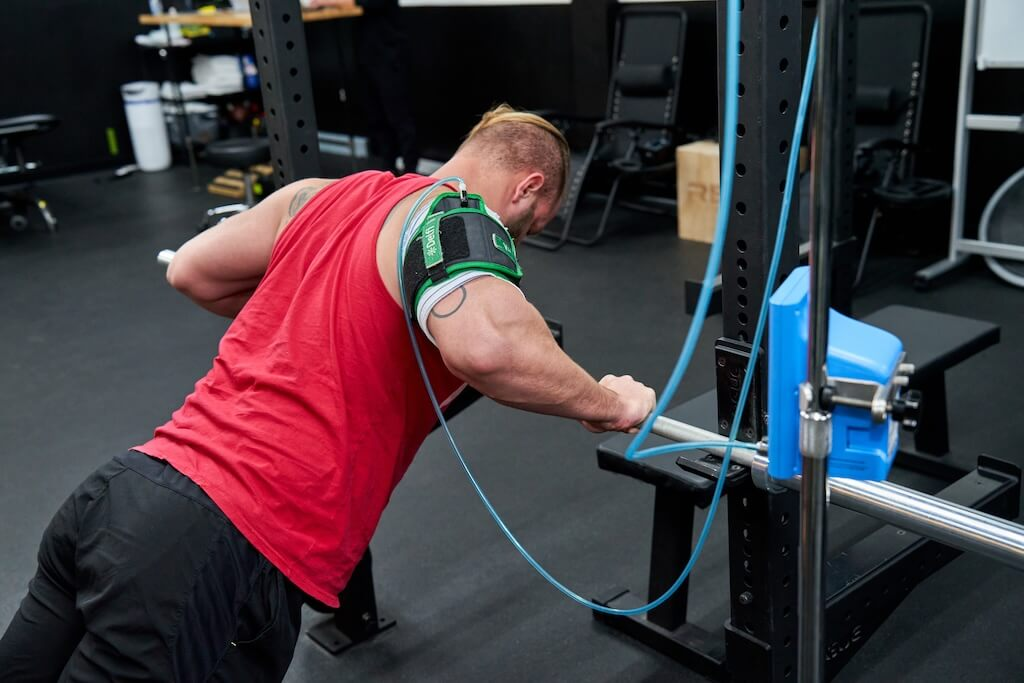
BFR training involves applying a specialized cuff or wrap to the upper arm or upper leg to partially restrict blood flow to the working muscle during exercise. You train with light resistance, typically 20 to 30 percent of your one-rep max, while the restricted circulation creates a physiological environment that drives strength and muscle adaptation far beyond what that weight level would normally produce.

The result: your body responds as though you are training much heavier than you actually are.

How Does BFR Training Work?

The science behind BFR comes down to three key mechanisms, explained without the textbook:

It forces your muscles to work harder than the weight suggests. Restricting blood flow reduces the oxygen available to the muscle. Your body responds by recruiting fast-twitch muscle fibers, the same fibers responsible for strength and size gains, much earlier in the set than it normally would. Light weight, high-level muscle demand.

It creates a powerful growth signal. As blood pools in the muscle, metabolic byproducts accumulate rapidly. This triggers the release of anabolic hormones including growth hormone and IGF-1, both of which drive muscle repair and growth. The cellular swelling that results also stretches muscle fibers directly, stimulating protein synthesis.

It protects your joints while your muscles do the work. Because the training load is light, the mechanical stress on joints, tendons, and healing tissue is minimal. This is what makes BFR uniquely valuable in rehab settings. You are creating a significant training stimulus without putting vulnerable tissue under heavy load.

Benefits of Blood Flow Restriction Training

The combination of those mechanisms produces a set of benefits that traditional training at light weights simply cannot match:

  • — Build and maintain muscle mass with minimal joint stress
  • — Accelerate recovery from injury or surgery without losing strength
  • — Reduce muscle atrophy during periods of limited movement or immobilization
  • — Improve return-to-play timelines by keeping athletes strong through the rehab process
  • — Train through pain-sensitive phases where heavier resistance is not yet appropriate
  • — Recover faster between sessions due to reduced muscle damage compared to heavy lifting

Who Benefits Most From BFR Training?

BFR is versatile enough to serve a wide range of athletes and situations:

  • — Pre and post-surgical athletes (ACL reconstruction, rotator cuff repair, and similar procedures) who need to maintain or rebuild strength without stressing healing tissue
  • — Athletes managing pain that limits their ability to increase resistance through traditional training
  • — In-season athletes dealing with accumulated fatigue or time constraints who need an efficient stimulus without adding recovery burden
  • — Runners looking to build leg strength and muscle endurance without the joint stress of heavy lower body lifting
  • — Active adults with chronic joint pain or arthritis who want to keep training without making symptoms worse
  • — Most healthy individuals looking for a smarter, more joint-friendly approach to strength and conditioning

BFR Training for Injury Rehabilitation

The old thinking was simple: if something hurts, rest it. What we see consistently in practice is that rest alone rarely solves the problem. Patients come in after weeks of rest still in pain, often weaker than before and no closer to getting back to what they love.

BFR changes that equation. During phases where heavy training is off the table, BFR allows us to keep athletes strong, maintain tissue quality, and build genuine capacity through the recovery process. The difference between coming back at 70 percent and coming back stronger than before is often what happens during the downtime, and BFR is one of the most powerful tools we have for that.

It has a particularly strong track record in ACL rehab, rotator cuff recovery, post-surgical lower extremity rehab, and return-to-sport programming across virtually every sport.

Is Blood Flow Restriction Training Safe?

Yes, when applied correctly by a trained clinician. At UNITE, BFR is always implemented with individualized pressure settings based on limb size and vascular response, not a one-size-fits-all approach. Every application is supervised and adjusted based on how the individual responds.

BFR is not appropriate for everyone. Individuals with certain cardiovascular or vascular conditions should be screened and cleared before starting. When in doubt, the right starting point is always a professional evaluation.

Common Exercises Used With BFR

BFR pairs well with simple, controlled movements that allow you to maintain good form under light resistance:

  • — Leg extensions and leg press
  • — Squats and split squats
  • — Hamstring curls
  • — Calf raises
  • — Bicep curls and tricep extensions
  • — Bodyweight and band-based upper body exercises

The emphasis is always on controlled tempo and movement quality. BFR amplifies the training effect of every rep, so form matters more here, not less.

Frequently Asked Questions

Is BFR training safe for people with joint pain? Generally yes, and joint pain is one of the primary reasons we recommend it. Because BFR relies on light resistance, the mechanical stress on painful joints is minimal while the muscular training stimulus remains high. It is particularly useful for individuals with arthritis, chronic knee or shoulder pain, or anyone in a pain-sensitive phase of recovery. That said, it should always be administered by a qualified clinician who can screen for contraindications and set appropriate parameters.

Is BFR training good for runners? It is one of the best tools available for runners specifically. BFR builds the quad, calf, and hip strength that running demands without adding the joint stress of heavy lower body lifting or the impact accumulation of more mileage. It is especially useful during recovery phases, injury management, and low-mileage training blocks where maintaining strength without adding load is the priority.

Why BFR Is Changing Rehab and Performance Training

The line between rehabilitation and performance training has always been blurrier than the traditional model suggests. BFR sits squarely at that intersection. It gives clinicians and coaches a tool to keep athletes strong through injury, accelerate recovery timelines, and build the physical capacity that makes returning to sport sustainable rather than just possible.

At UNITE, BFR is not a novelty or an add-on. It is a standard part of how we help athletes and active adults get back to full performance and stay there.

Ready to Find Out If BFR Is Right for You?

Schedule your free discovery visit to learn how Blood Flow Restriction training can help you recover faster, build strength safely, and return to performance with less pain and less time on the sidelines.

Schedule Your Free Discovery Visit →

Dr. Victoria Riester, PT, DPT

Dr. Victoria Riester, PT, DPT is a Performance Physical Therapist at UNITE.rehab.perform in Thornton, CO. A former competitive cheerleader and volleyball player, Dr. Victoria experienced low back pain firsthand as an athlete and found traditional PT falling short. That experience drives her approach today: movement-based, athlete-focused care designed to get people back to sport and keep them there.

Don’t leave it to chance.

Let Denver’s premier team of sports physical therapists and performance coaches lead the way!