Close

Why More Active Adults Are Choosing EPAT Shockwave Over Injections and Surgery

Written by Dr. Victoria, DPT

If you’ve been dealing with chronic tendon pain, plantar fasciitis, or a nagging injury that won’t fully heal, you’ve probably been offered one of two options: a cortisone injection to quiet the pain, or surgery to address it more permanently. What most people aren’t told is that there’s a third option — one that’s non-invasive, requires little to no downtime, and actually stimulates your body to heal rather than simply masking the problem.

It’s called EPAT shockwave therapy, and it’s changing the way active adults and athletes approach pain and injury recovery.

What Is EPAT Shockwave Therapy?

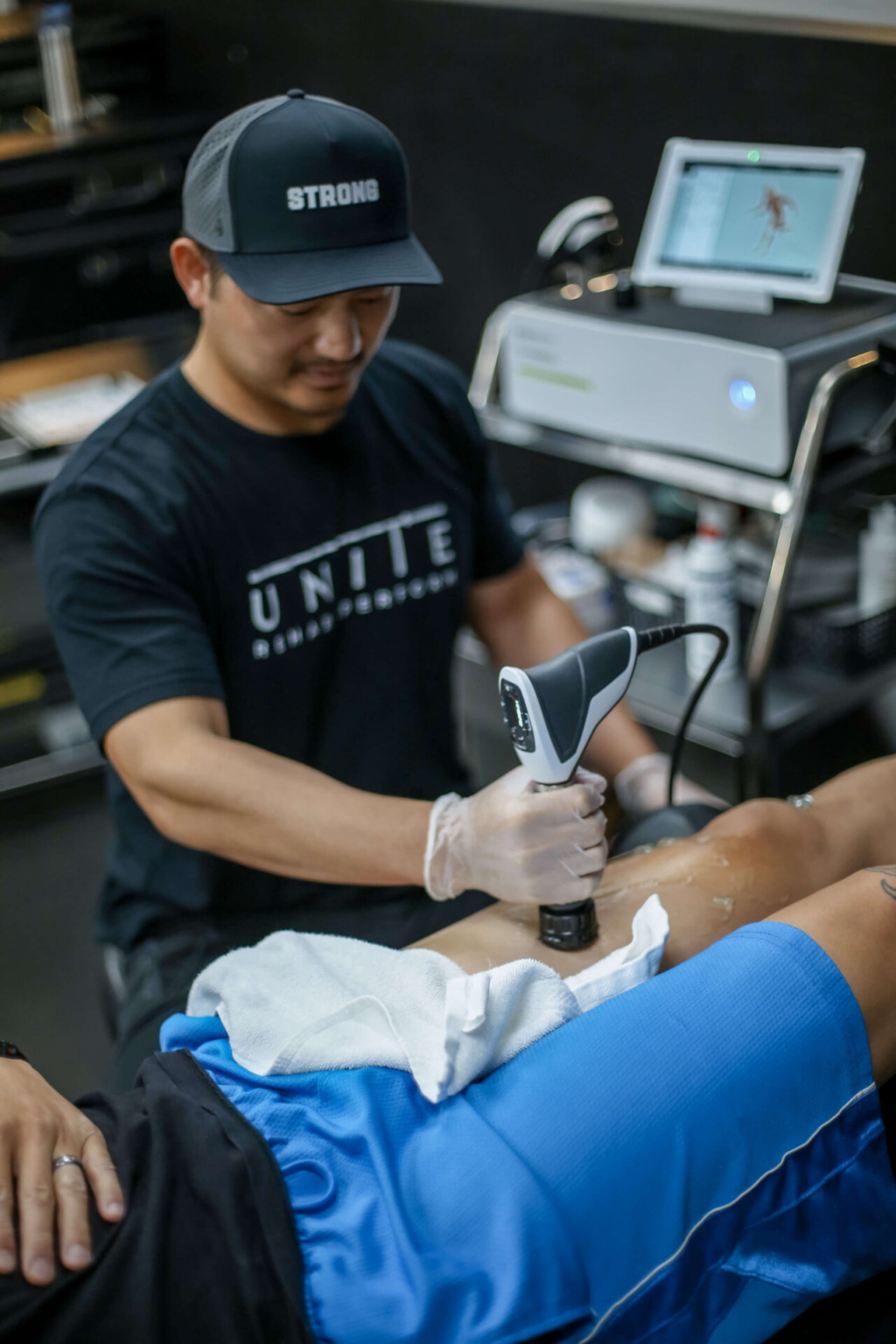
EPAT stands for Extracorporeal Pulse Activation Technology. It’s a non-invasive treatment that uses high-energy acoustic waves delivered directly to damaged tissue, activating your body’s natural healing processes to reduce pain and restore function.

Used extensively in sports medicine and orthopedic settings, EPAT is backed by research for chronic tendon conditions and musculoskeletal pain — and it’s becoming the preferred choice for people who want real, lasting results without the risks or recovery time that come with more invasive approaches.

[Check it out HERE]

How Does Shockwave Therapy Work?

When acoustic waves reach the target tissue, they trigger a cascade of biological responses that passive treatments like ice, ultrasound, or cortisone simply can’t replicate. Here’s what’s actually happening:

Increases blood flow and healing response Shockwave stimulates the growth of new blood vessels (neovascularization) in the treated area, improving circulation and delivering the nutrients damaged tissue needs to repair.

Stimulates collagen production Collagen is the structural backbone of tendons and connective tissue. EPAT activates collagen synthesis, supporting genuine tissue repair rather than temporary symptom relief.

Breaks down calcifications Chronic injuries often develop calcium deposits that restrict movement and contribute to pain. Shockwave therapy breaks these down mechanically, clearing the way for healthier tissue.

Reduces pain signals EPAT modulates local pain receptors, providing meaningful symptom relief while the deeper healing process gets underway — so you’re not just waiting out the treatment in discomfort.

Boosts cellular metabolism At a cellular level, shockwave therapy accelerates the metabolic activity of damaged tissue, speeding up the overall recovery timeline.

The result is a treatment that addresses the root cause of pain rather than suppressing it — which is why results tend to last.

[Check out shockwave therapy in action]

Shockwave Therapy vs Cortisone Injections vs Surgery

For most chronic tendon and soft tissue conditions, patients are presented with a familiar set of options. Here’s how they actually compare:

Cortisone Injections Cortisone is an anti-inflammatory that can provide meaningful short-term relief — sometimes within days. The problem is that it does not stimulate healing. For many patients, pain returns weeks or months later, and repeated injections can actually weaken tendon tissue over time, increasing the risk of rupture.

Surgery Surgery addresses structural damage directly and can be the right call in certain situations. But it comes with real tradeoffs: general anesthesia, significant downtime, a lengthy rehab process, and the inherent risks of any invasive procedure. For many chronic tendon conditions, outcomes with surgery are not substantially better than non-surgical alternatives.

EPAT Shockwave Therapy EPAT stimulates the body to heal the damaged tissue itself. There are no needles, no incisions, and no downtime that forces you off the training floor. Most patients continue their normal activities throughout the treatment course, with modifications as needed. And because the tissue is actually repairing rather than being numbed or bypassed, results tend to hold.

For active adults and athletes who want to stay in motion and avoid the risks of more invasive treatment, EPAT is increasingly the first choice rather than the last resort.

Conditions Treated With EPAT Shockwave Therapy

EPAT is effective across a wide range of musculoskeletal conditions, including:

  • — Plantar fasciitis
  • Achilles tendinitis
  • — Patellar tendinitis (Jumper’s Knee)
  • — Tennis elbow and golfer’s elbow
  • — Shin splints
  • — Muscle strains and ligament sprains
  • Low back pain
  • — Morton’s neuroma
  • — And more — if you don’t see your condition listed, it’s worth asking

Who Is EPAT Right For?

EPAT is particularly well-suited for:

  • — Active adults and athletes who need to stay in motion and can’t afford extended downtime
  • — Runners, lifters, and CrossFit athletes dealing with chronic tendon pain that won’t fully resolve with rest or traditional PT
  • — Anyone who has tried cortisone injections and experienced temporary relief followed by returning symptoms
  • — People looking to avoid surgery for conditions like plantar fasciitis or Achilles tendinitis where non-surgical options are viable
  • — Patients who have completed PT but still have residual pain or tissue that hasn’t fully healed

If any of those describe you, EPAT is worth a serious conversation.

What to Expect From Treatment

EPAT sessions are straightforward and efficient:

  • — Session length: Typically 5 to 15 minutes per treatment area
  • — Sensation: Most patients describe mild pressure or a pulsing sensation. It is not painless, but it is well-tolerated — and discomfort during treatment is a sign the acoustic energy is reaching the right tissue
  • — Number of sessions: Most conditions respond well to 3 to 6 sessions, spaced about a week apart
  • — Timeline for results: Many patients notice improvement within 2 to 4 weeks, with continued progress through and beyond the treatment course
  • — Activity during treatment: In most cases you can continue training with modifications — you are not sidelined while healing happens

Ready to Find Out If EPAT Is Right for You?

If you’ve been managing chronic pain with injections, rest, or conservative care that hasn’t delivered lasting results, EPAT shockwave therapy may be the missing piece in your recovery.

At UNITE, we’ll evaluate your injury, walk you through whether EPAT is the right fit, and build a plan that gets you back to full performance — not just pain-free in a controlled setting.

Schedule Your Shockwave Therapy Consultation →

Don’t leave it to chance.

Let Denver’s premier team of sports physical therapists and performance coaches lead the way!