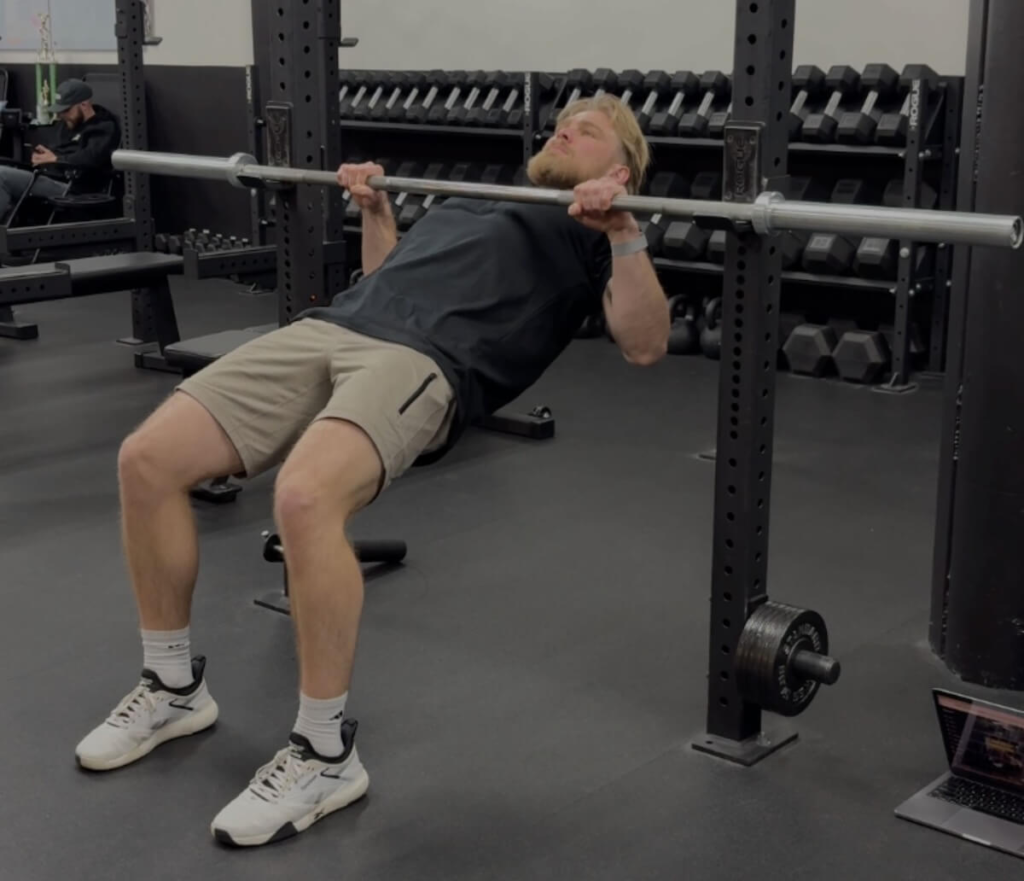
Step 1: Build Upper Back Strength with Inverted Row Holds
Before you attempt pull-ups, you need a strong upper back and stable shoulder blades.This is the foundation of all bodyweight pulling exercises.
How to do it
- – Set a bar, rings, or TRX at a comfortable height
- – Pull your chest to the bar and hold
- – Squeeze your shoulder blades together
- – Keep your core tight and neck relaxed
These isometric holds build endurance in the exact muscles responsible for pulling your body upward.
Why this matters
Most beginners fail pull-ups because their upper back cannot stabilize under load. This step teaches your body how to hold strong before it learns how to pull.
Step 2: Progress to Inverted Rows for Beginners
Now we turn static strength into movement strength. Inverted rows for beginners are one of the most effective ways to build pull-up capacity without overloading your joints.
How to do it
- – Pull your chest to the bar with control
- – Lower slowly back to the start
- – Keep shoulders down and ribs stacked
Adjust difficulty
- – Higher bar = easier
- – Lower bar = harder
Gradually lowering the bar increases strength safely and predictably.
Coaching insight
This is where real pulling strength starts. Strong inverted rows translate directly into stronger pull-ups.
Step 3: Develop Grip and Shoulder Readiness with Dead Hangs
Before pulling your bodyweight, your shoulders must tolerate the overhead position. Dead hangs build grip strength, shoulder integrity, and connective tissue tolerance.
How to do it
- – Hang from the bar with engaged shoulders
- – Avoid shrugging into your ears
- – Breathe slowly and stay tight through your core
Why dead hangs matter before pull-ups
If your grip fails or shoulders fatigue early, your pull-up stops before it begins. This step prepares your body to handle the load safely.
Step 4: Practice the Pattern with Band-Assisted Pull-Ups
Now you begin the full movement. Band-assisted pull-ups allow you to train the real pattern while controlling how much help you receive.
How to do it
- – Use a resistance band for assistance
- – Pull with your elbows, not your hands
- – Keep ribs down and avoid swinging
- – Move with control, not momentum
Progression tip
- – Thick band = more assistance
- – Thin band = less assistance
As strength improves, gradually reduce assistance.
Step 5: Own the Top Position with Isometric Pull-Ups
Many beginners cannot hold the strongest part of the pull-up, which is the top position. This step builds control where strength matters most.
How to do it
- vJump or step to the top
- – Chin over the bar
- – Hold with full upper-back engagement
- – Stay tight through core and glutes
This teaches your nervous system what a completed pull-up actually feels like.
Step 6: Build Real Strength with Eccentric Pull-Ups
The final step before your first full rep is the eccentric pull-up. This is one of the most effective strength builders in any pull-up training program.
How to do it
- – Start at the top
- – Lower slowly for 3 to 6 seconds
- – Control the entire descent
Eccentric work strengthens your pulling muscles, connective tissue, and control under load.
Yes, soreness is normal
This is where real strength is built.